Tech for Earth: Earth as a Living Digital Nervous System

Building on the themes of our previous coverage in Tech for Earth, the past month has seen a convergence of space technology, artificial intelligence, and cartographic innovation. Currently, the field is producing real-time, decision-ready intelligence designed to address climate resilience, infrastructure safety, and environmental protection. This evolution is creating what can be described as a “living digital nervous system,” where multiple technologies – once considered separately – are now intersecting through real-world and spatial information.
Orbital Vision: The Completion of the Sentinel-1 Family
A major milestone for the European Space Programme occurred on November 4, 2025, with the successful launch of the Copernicus Sentinel-1D satellite aboard an Ariane 6 rocket. This satellite completes the first generation of the Sentinel-1 constellation, ensuring radar data continuity for the next decade. Remarkably, Sentinel-1D delivered its first high-resolution radar images within just 50 hours of launch, a feat believed to be a new record for space-based radar. These “first light” images captured the fragile beauty of the Antarctic Peninsula and the Thwaites Glacier, as well as the southern tip of South America and the city of Bremen, Germany.
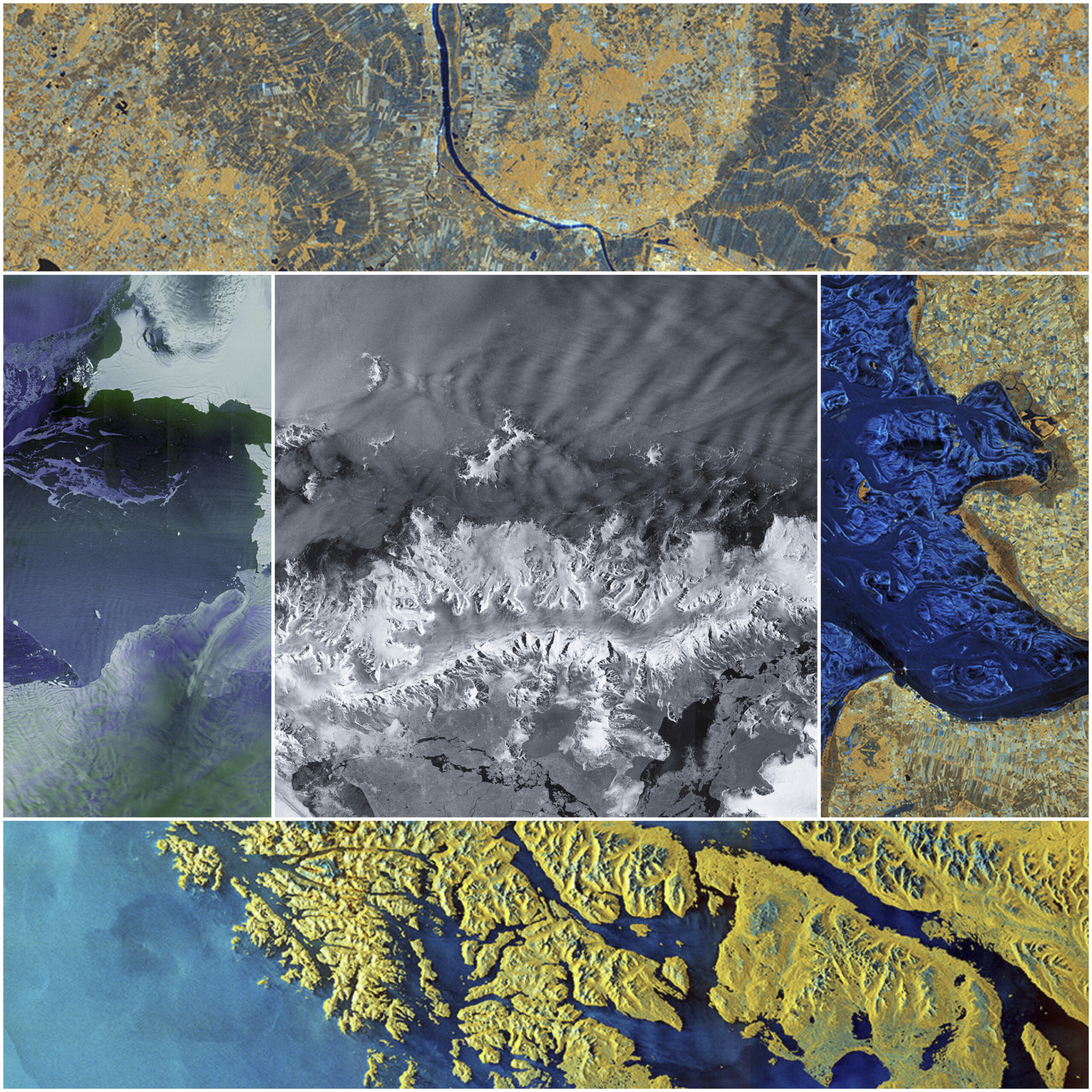
The Sentinel-1 mission provides a “radar vision” that can penetrate thick cloud cover, fog, and rain, acquiring images day or night. This capability is essential for tracking subtle changes in tropical forests, monitoring volcanic activity, and quantifying ground deformation after earthquakes. In tandem with this radar expansion, the EU Space Programme is also preparing for the launch of Copernicus Sentinel-6B, which will continue a thirty-year legacy of centimeter-precision sea-level monitoring. This mission is dedicated to coastal cities like Rotterdam and Venice that face increasing flood risks as global sea levels rise at record rates.
AI-Powered Environmental Intelligence
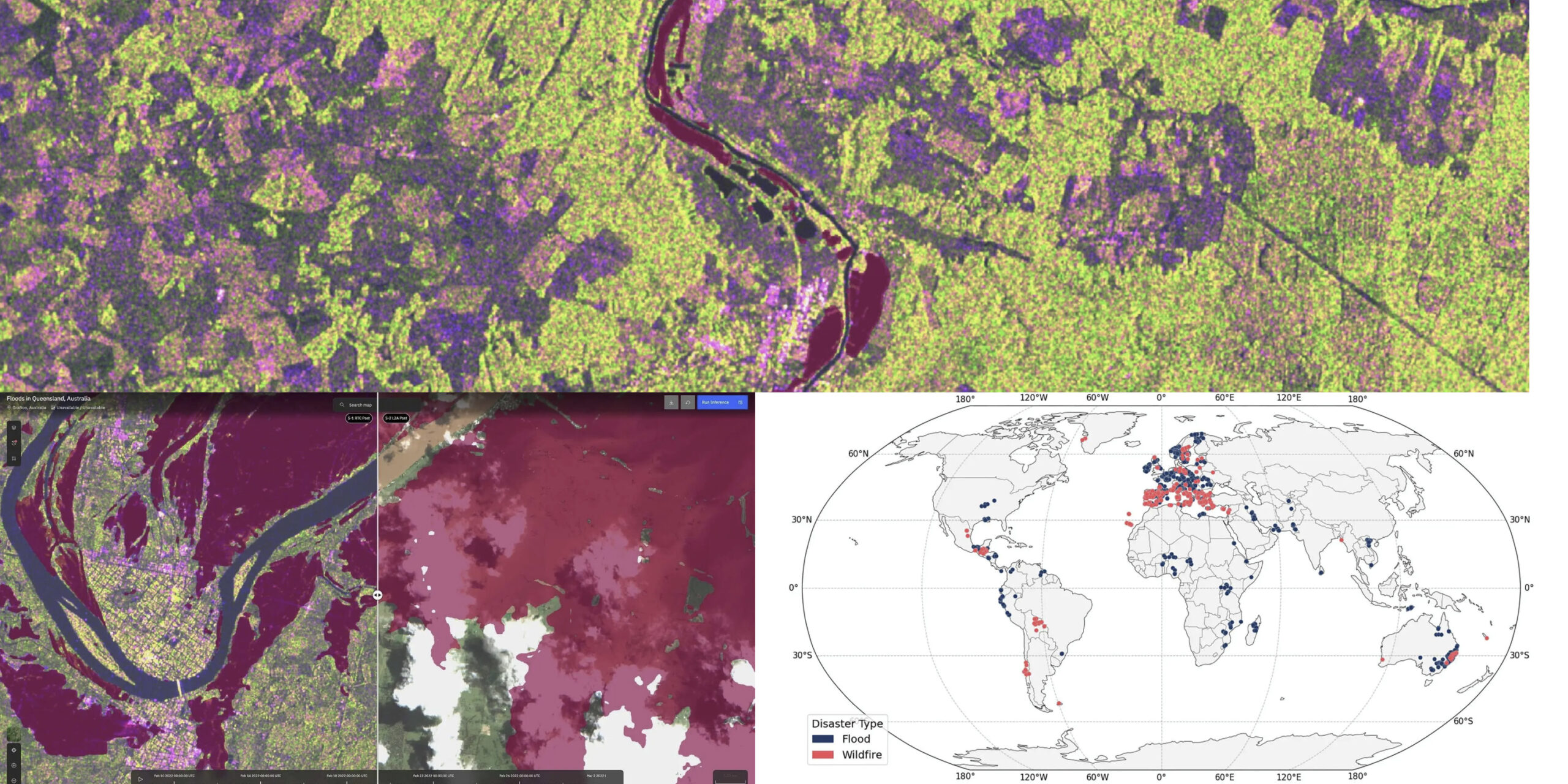
The integration of generative AI and geospatial data has reached new heights with several major releases. IBM and the European Space Agency (ESA) have open-sourced ImpactMesh, the first global multi-modal dataset for analyzing extreme floods and wildfires. By fusing radar, optical, and elevation data from the last decade, their fine-tuned TerraMind model can now produce burn scar maps with 5% higher accuracy than traditional methods. These models are designed to improve disaster preparedness by allowing responders to see through storm clouds or smoky fires that typically block optical sensors.
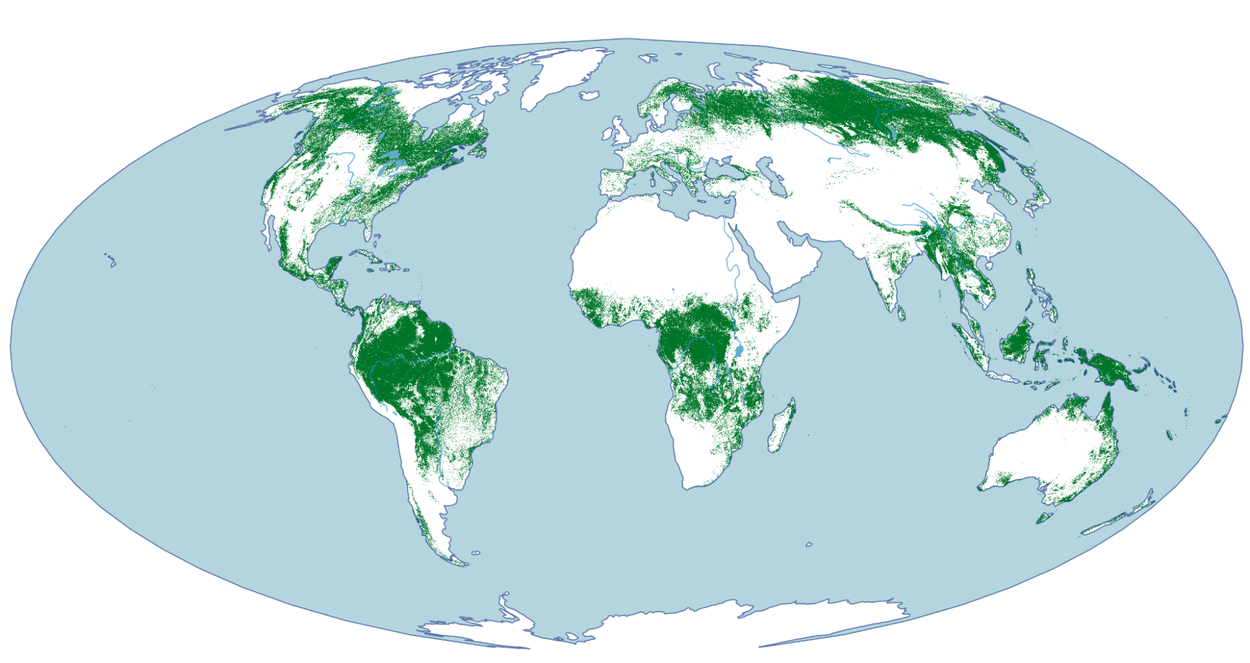
In the realm of meteorology, Google DeepMind introduced WeatherNext 2, an AI forecasting model capable of generating hundreds of possible weather scenarios in under a minute. It is 8x faster than previous versions and provides hourly resolution, surpassing previous state-of-the-art models on 99.9% of variables such as temperature, wind, and humidity. Furthermore, in a move for biodiversity, Google Research and DeepMind released a 10-meter resolution map that distinguishes natural forests from commercial plantations. This dataset is useful for compliance with the EU Regulation on Deforestation-free Products (EUDR), ensuring that products like coffee and cocoa sold in the EU do not contribute to the degradation of biodiversity-rich ecosystems.
The Advent of Autonomous and Agentic GIS
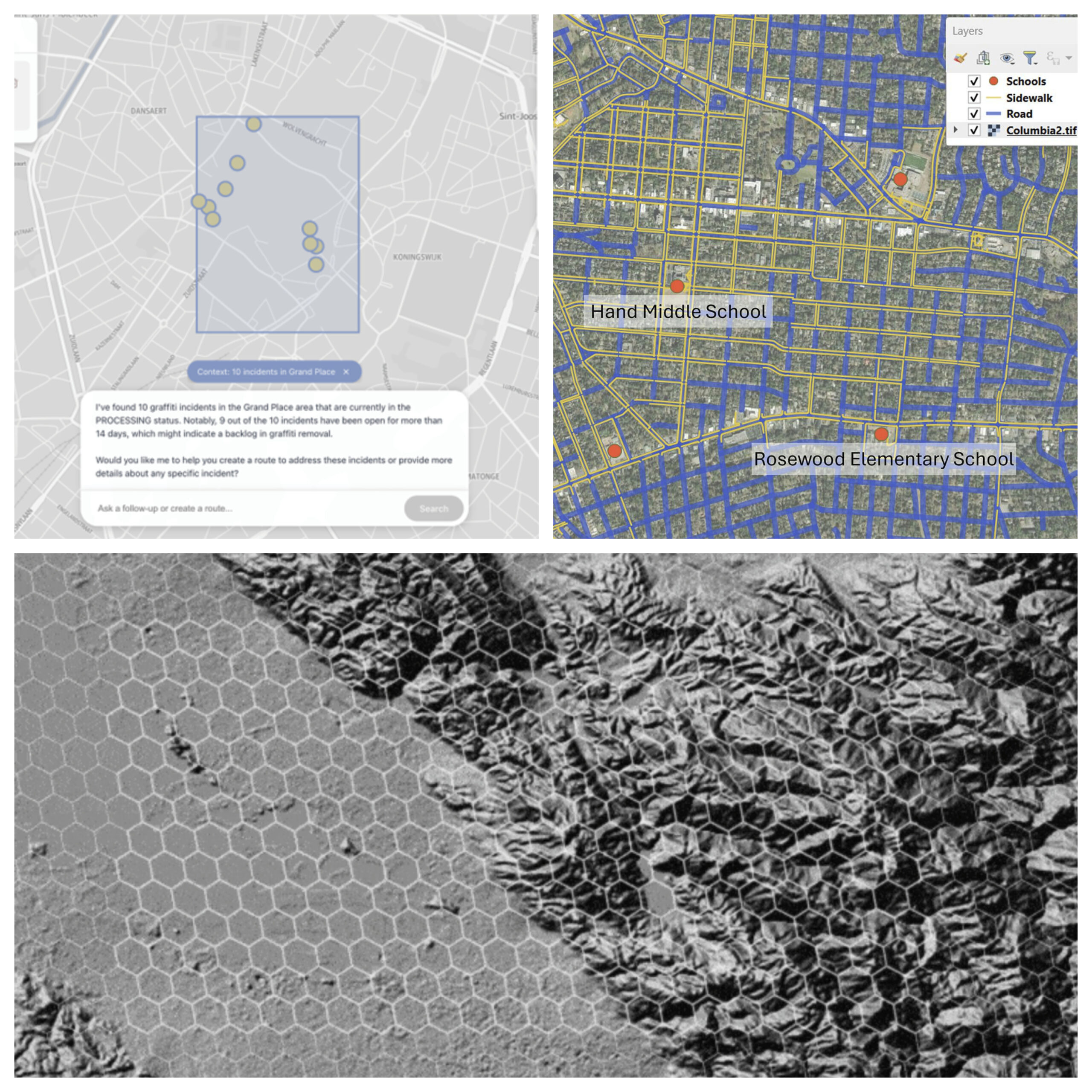
In the field of Geographic Information Systems, we can notice the rise of autonomous AI agents. A multi-institutional team led by Penn State researchers demonstrated agents capable of performing complex geospatial tasks with minimal human oversight. Their LLM-Find agent can autonomously retrieve specific geospatial datasets based on natural language prompts, while the GIS Copilot completed over 100 multi-step spatial tasks with an 86% success rate. This suggests a future where non-experts can perform sophisticated spatial analysis through conversational interactions.
Complementing this, AWS and Foursquare have introduced geospatial AI agents that enable domain experts to answer complex spatial questions in minutes instead of months. By using the H3 hierarchical spatial grid as a universal join key, these agents can combine disparate datasets – such as property insurance records and climate risk projections – without requiring custom data engineering. Similarly, the Strands Agents framework is being used in the public sector to help government workers manage incident reports and optimize resource routing through simple conversational requests.
Infrastructure Safety and Urban Resilience
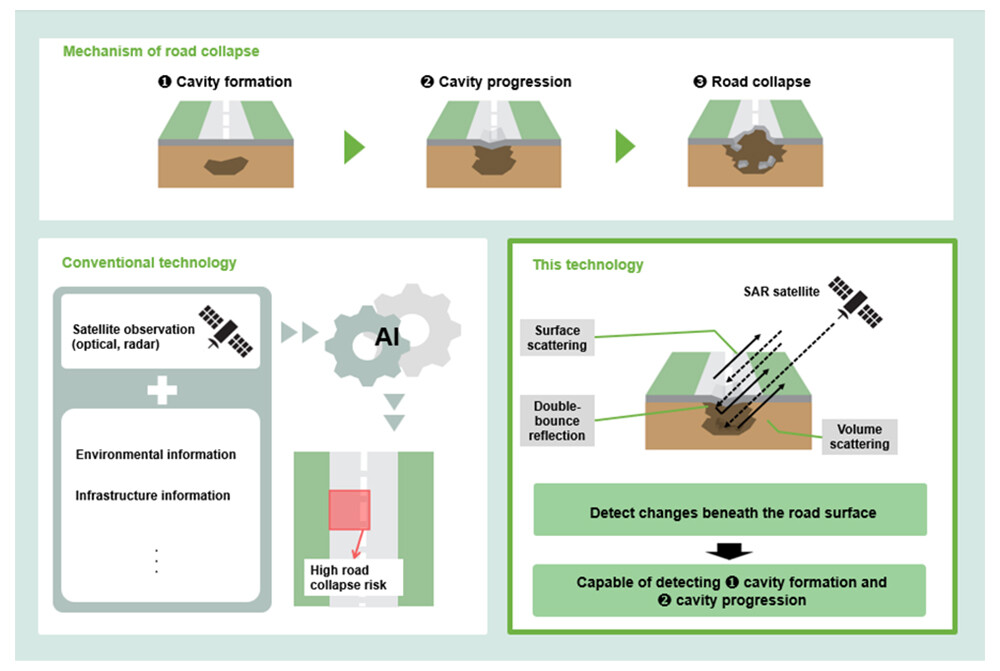
Technological breakthroughs are also being applied to immediate human safety concerns. NTT successfully demonstrated a world-first method for detecting early signs of underground road cave-ins using reflected radio waves from SAR satellites. By analyzing radio waves capable of penetrating asphalt, this technology can identify potential cavities beneath the surface without the need for on-site survey vehicles, a move expected to reduce inspection costs by approximately 85%.
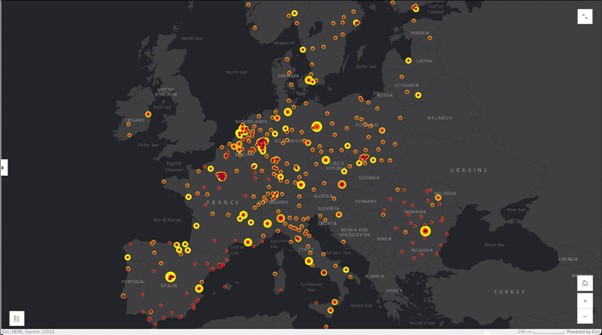
In Europe, nations are deploying GIS-based noise maps to combat the “silent killer” of noise pollution, which is linked to thousands of premature deaths and an annual economic loss of $111 billion. These maps, such as those maintained by the Irish Environmental Protection Agency, allow policymakers to visualize noise hotspots – like the M50 freeway in Dublin or the Guinness Brewery – and implement infrastructure solutions like noise barriers. Additionally, an ESA-led “AI for Earthquake Response Challenge” recently recognized international teams for developing models that automate building damage detection from space, a capability critical for rapid search-and-rescue efforts.
The Evolution of Cartography and Historical Discovery
The past month has highlighted the enduring power of maps as “memory engines” that connect place and emotion. Allen Carroll, the creator of ArcGIS StoryMaps, released his new book, Telling Stories with Maps, reflecting on how the platform has enabled over 3.5 million stories to be told, ranging from Indigenous territories in the Amazon to wildlife migrations.
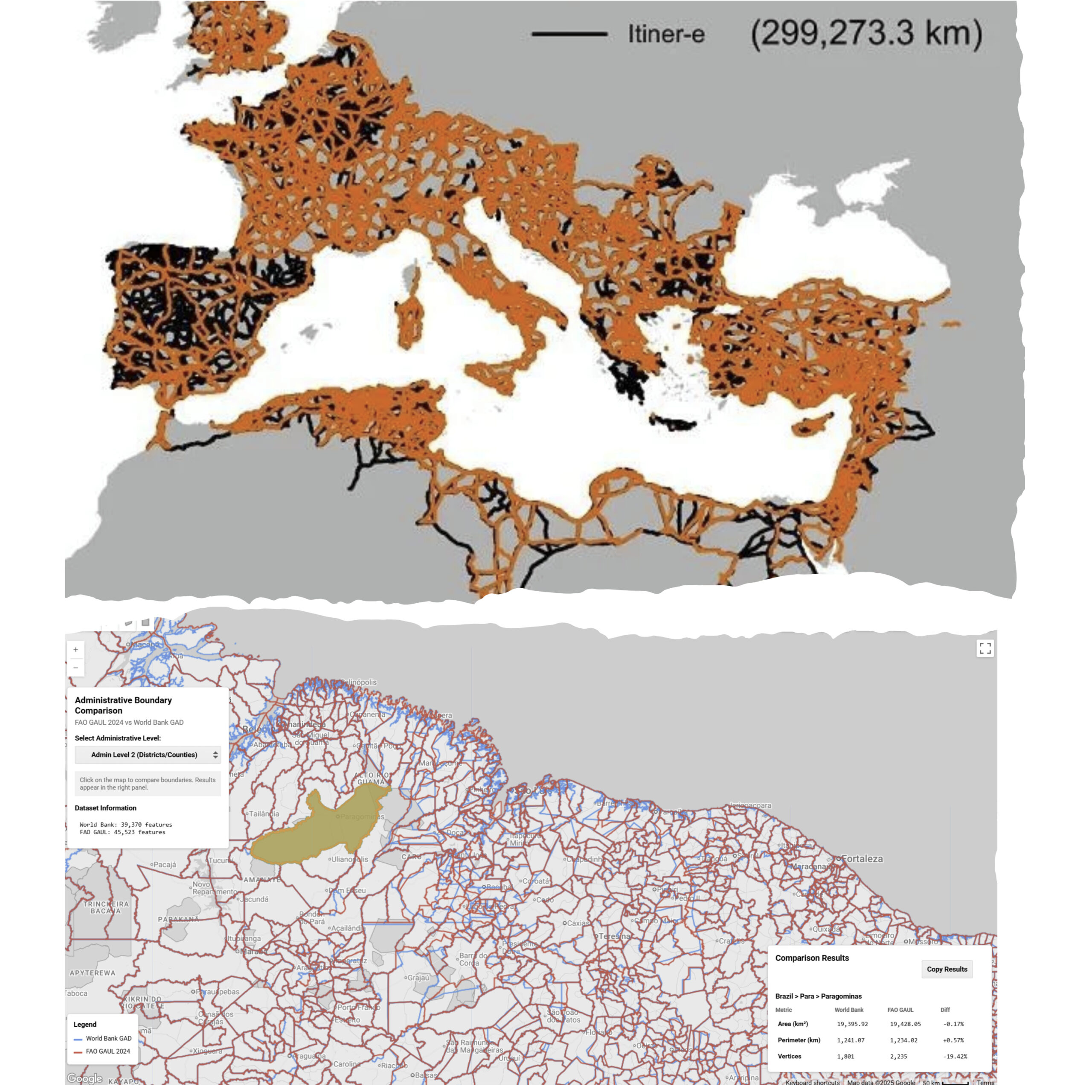
This spirit of discovery extends into our past with the release of Itiner-e, a high-resolution digital map of the Roman Empire around 150 CE. This dataset nearly doubles the previously known length of the Roman road network, documenting 299,171 kilometers of roads. Simultaneously, the World Bank has released new high-resolution global administrative boundaries as an open public good to improve the quality of subnational development research and support smarter decision-making.
In summary: Tech for Earth as a Living Digital Nervous System is becoming reality: data streams interact continuously, sensing subtle changes across the planet and enabling faster, coordinated, and informed responses.
Did you like this post? Follow us on our social media channels!
Read more and subscribe to our monthly newsletter!


#GeoAI


Next article
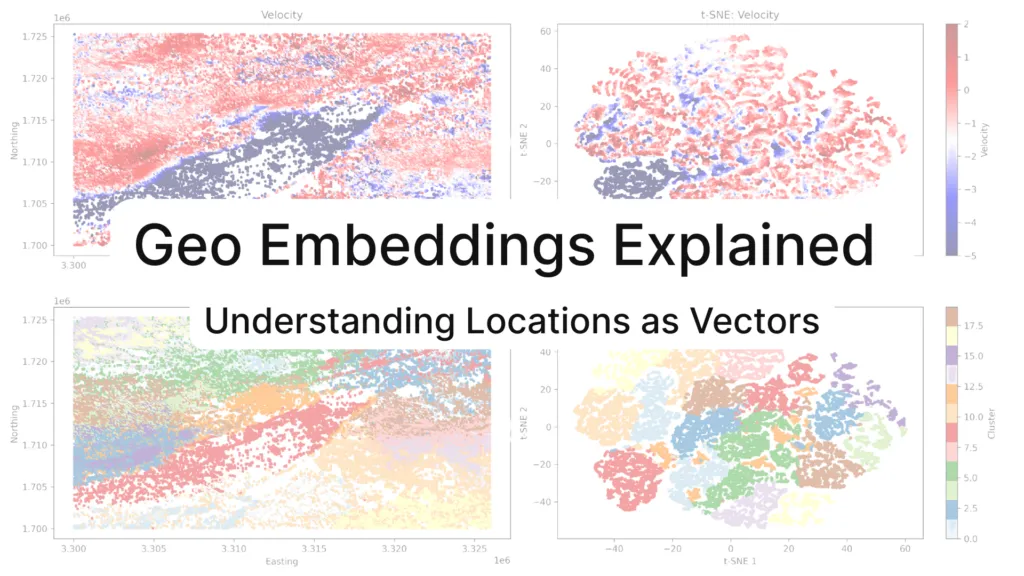
Geo Embeddings Explained: Understanding Locations as Vectors
In geospatial analysis, a basic but often implicit challenge is enabling a computer to reason about distance – for example, to recognize that Munich is closer to Augsburg than to Tokyo.
If we give a machine learning model raw latitude and longitude, it often fails to understand distance correctly. Most models treat numbers as if they lie on a flat grid. They assume a simple x and y space. But the Earth is round, not flat. Because of this, a one-degree change in longitude does not mean the same everywhere on the planet. Near the equator, it covers a large distance. Near the poles, it covers a much smaller one. When models treat latitude and longitude like normal numbers, distance becomes distorted, which leads to biased or unstable results.
There is another problem. Coordinates only say where something is. They do not say what that place is. A single point could be a pharmacy, a house, or a road crossing. The model has no idea about the surroundings, nearby services, or how people use that place. This lack of context is a major issue in tasks like mobility analysis, delivery planning, or location matching, which rely on understanding place meaning rather than just position.
Geo embeddings solve these problems by turning locations into vectors. These vectors are designed so that nearby places have similar values, and places with similar roles can be close even if they are far apart. With geo embeddings, locations become meaningful features that machine learning models can actually learn from.
What Is an Embedding?
The embedding is a way to turn something complex into a list of numbers that a machine learning model can use. These numbers are called a vector. The key idea is that similar features should end up with similar vectors.
A simple example comes from text. In language models, words are turned into vectors so that words with similar meaning are close to each other. For example, the vectors for “banana” and “orange” are closer than the vectors for “butterfly” and “banana”. This works because the model learns from how words appear together in text. This idea is explained clearly in the introduction to what embeddings are.
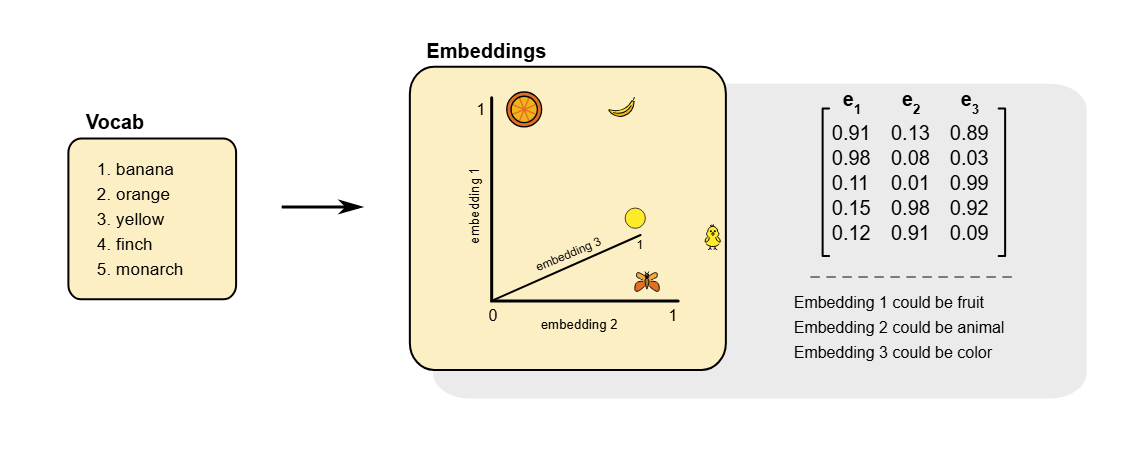
Source: Word Embeddings
What makes embeddings powerful is that the distance between vectors has meaning. If two vectors are close, the model treats them as similar. If they are far apart, the model treats them as different. This allows simple tools like distance calculations or nearest neighbor search to work well.
The same idea can be used for locations. A place on Earth is not just a coordinate; it is a combination of surrounding infrastructure, human activity, and environmental context. The geo embedding turns this complexity into a vector. Two locations that are close on the ground, or used in similar ways, can end up close in vector space. This makes location data much easier to use in clustering, similarity search, and machine learning models.
Why Use Geo Embeddings?
Geo embeddings matter because they change how geospatial data is handled from the ground up.
A single location is rarely described by just one attribute. In practice, it may be linked to imagery, climate signals, elevation, roads, population, or human activity. Working with all these layers directly is heavy and often repetitive. Geo embeddings help by compressing this rich information into a short vector that models can use easily. This becomes especially useful when working with large areas or multiple datasets, which is why embeddings are a key component in modern systems built around geospatial foundation models.
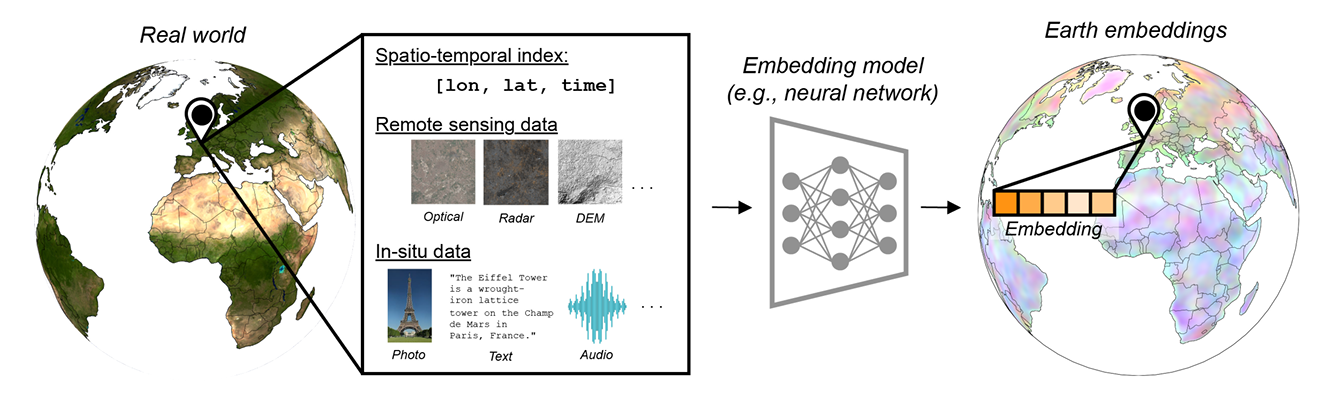
Source: Earth Embeddings: Towards AI-centric Representations of our Planet
Geo embeddings also make it easier to combine different kinds of data. Text, images, and structured features can all be tied to the same location. By representing them in a shared vector space, models can learn from these sources together instead of treating them as separate layers. This idea is used in real-world systems such as geospatially aware place embeddings, where location context improves tasks like matching and prediction.
Another important benefit is reuse. Once a location is represented as a vector, that same vector can be used again and again. It can support prediction, clustering, or similarity search without redesigning location features for every task. This reuse is the same reason vector embeddings are effective across many areas of machine learning.
Finally, geo embeddings simplify geospatial workflows. Instead of building many handcrafted features and complex preprocessing steps for each new project, users can start from a strong default representation of location and focus on the problem they actually want to solve.
At a high level, geo embeddings shift geospatial analysis from managing many disconnected layers to working with one meaningful vector per place.
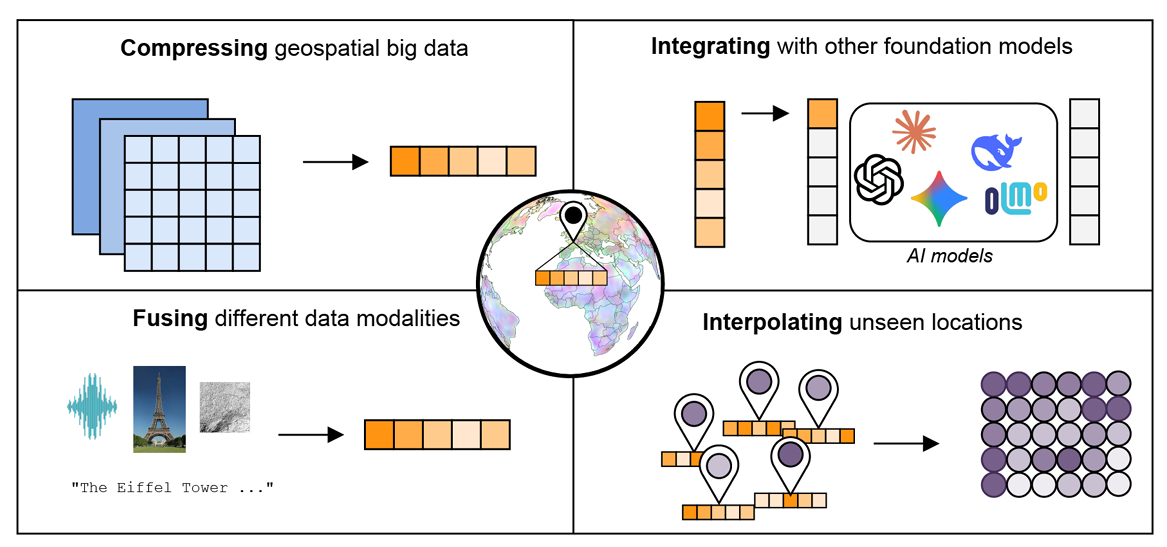
Source: Earth Embeddings: Towards AI-centric Representations of our Planet
Getting Started with Python
Let us look at a very small example with just three locations.
munich = (48.1351, 11.5820) augsburg = (48.3705, 10.8978) tokyo = (35.6762, 139.6503) |
Step 1: Real distance on Earth
Latitude and longitude do not live on a flat map. The Earth is round, so distance must be measured along its surface. The Haversine formula does exactly this. It calculates the shortest path between two points on the Earth, also called the great circle distance.
import math def haversine(lat1, lon1, lat2, lon2): r = 6371 lat1, lon1, lat2, lon2 = map(math.radians, [lat1, lon1, lat2, lon2]) dlat = lat2 - lat1 dlon = lon2 - lon1 a = math.sin(dlat / 2)**2 + math.cos(lat1) * math.cos(lat2) * math.sin(dlon / 2)**2 c = 2 * math.asin(math.sqrt(a)) return r * c |
Using this, we can compare distances between locations.
print("Munich → Augsburg (km):", round(haversine(*munich, *augsburg), 1)) print("Munich → Tokyo (km):", round(haversine(*munich, *tokyo), 1)) |
Output:
Munich → Augsburg (km): 57.0
Munich → Tokyo (km): 9369.1
This confirms what we expect. Munich is much closer to Augsburg than to Tokyo. But notice that we had to use special math just to get this right. Raw coordinates alone are not enough.
Step 2: A simple geo embedding with H3
Instead of working with distance every time, we can turn each location into a single value that already encodes proximity. H3 (global spatial indexing system developed by Uber) does this by dividing the Earth into hexagonal cells and assigning each cell a unique ID.
The resolution controls cell size. Resolution 7 is roughly city scale, which works well for simple examples.
import h3 resolution = 7 munich_h3 = h3.latlng_to_cell(*munich, resolution) augsburg_h3 = h3.latlng_to_cell(*augsburg, resolution) tokyo_h3 = h3.latlng_to_cell(*tokyo, resolution) print("Munich →", munich_h3) print("Augsburg →", augsburg_h3) print("Tokyo →", tokyo_h3) |
Output:
Munich → 871f8d7a4ffffff
Augsburg → 871f8c349ffffff
Tokyo → 872f5a363ffffff
Each location is now represented by one string. Munich and Augsburg share a similar H3 prefix, which shows that they fall into nearby hexagonal cells, while Tokyo belongs to a completely different part of the grid. This single value already captures proximity in a form that machine learning models handle much better.
This is a fixed geo embedding. It does not learn meaning from data, but it provides a clean and stable way to represent location without worrying about Earth’s curvature or inconsistent distance scaling. In the next section, we will look at embeddings that learn similarity from data, not just physical distance.
Note: While H3 is technically a geospatial index (a way to categorize space), in this context, we can think of it as a fixed embedding because it provides a stable representation of location that models can use more easily than raw coordinates.
Learning Based Geo Embeddings
Learning based geo embeddings go one step further than fixed grids like H3. H3 captures physical closeness, but many real-world problems care more about how places are used.
Instead of dividing the Earth into fixed cells, learning based methods learn location vectors from data. The idea is simple. Places that have similar attributes should have similar vectors. If two areas are used in similar ways – whether through visitor patterns, deliveries, or other activities – they should be represented close to each other in the embedding space. This way of learning places meaning from behavior appears in work on location representation learning. This idea is similar to how embeddings work in language. Words that appear in similar contexts get similar vectors. For locations, the context comes from movement and activity, such as GPS traces, check -ns, or nearby services.
The result is a vector for each location. Two places can be close in this space even if they are far apart on the map. For example, business districts in different cities can end up closer to each other than to nearby residential areas. Systems like Loc2Vec follow this approach.
These embeddings are more flexible than fixed grids, but also harder to build. For many tasks, simple spatial indexing is enough. Learning based embeddings are useful when you care about place meaning and behavior, not just distance.
Next Steps and Resources
If you want to continue learning about geo embeddings, the most important thing is to stay practical.
A good next step is to spend more time with H3. Even though it is an index, it builds the spatial intuition you need for more advanced work. Try changing the resolution and observe how cell size changes. Count points per cell, look at neighbors, and visualize results on a map. This builds intuition for how location turns into structure. The official H3 documentation is the best reference for this stage, and you do not need to read it all. Focus on indexing, resolution, and neighbors.
Once you are comfortable with fixed grids, the next step is understanding what embeddings can represent, not how to train them. A broad and readable overview is Earth Embeddings: Towards AI-centric Representations of Geospatial Data. You do not need to follow the technical details. Read it to understand what kinds of information embeddings can carry and why they are useful across many geospatial problems.
If you want to see embeddings applied to real data without building models yourself, explore how satellite data is represented as vectors in practice. Resources like Google Earth Engine’s embedding datasets show how embeddings are used for classification, regression, and similarity search at scale.
Future Outlook
Geo embeddings are already being used in real systems, not just experiments.
Open source Earth foundation models like Clay show how a single model can produce reusable Earth embeddings from multiple satellite sources. These embeddings act as a common representation for many downstream tasks instead of task-specific features.
Other projects connect space with language. SkyScript links satellite imagery and text descriptions in a shared vector space, making it possible to search for locations using natural language instead of coordinates.
Large-scale platforms are also adopting these ideas. Microsoft’s Planetary Computer uses embedding-based methods to support global environmental monitoring and similarity search across ecosystems.
Together, these projects show where the field is heading: location is becoming a vector that can be searched, compared, and reused across many systems.
Further Resources
- https://dataarmyintel.io/knowledge-article/geohash-or-h3-which-geospatial-indexing-system-should-i-use/
- https://medium.com/google-earth/ai-powered-pixels-introducing-googles-satellite-embedding-dataset-31744c1f4650
- https://www.youtube.com/watch?v=UN0vvSxQ-50
- https://www.ibm.com/think/topics/vector-embedding
Did you like this post? Read more and subscribe to our monthly newsletter!