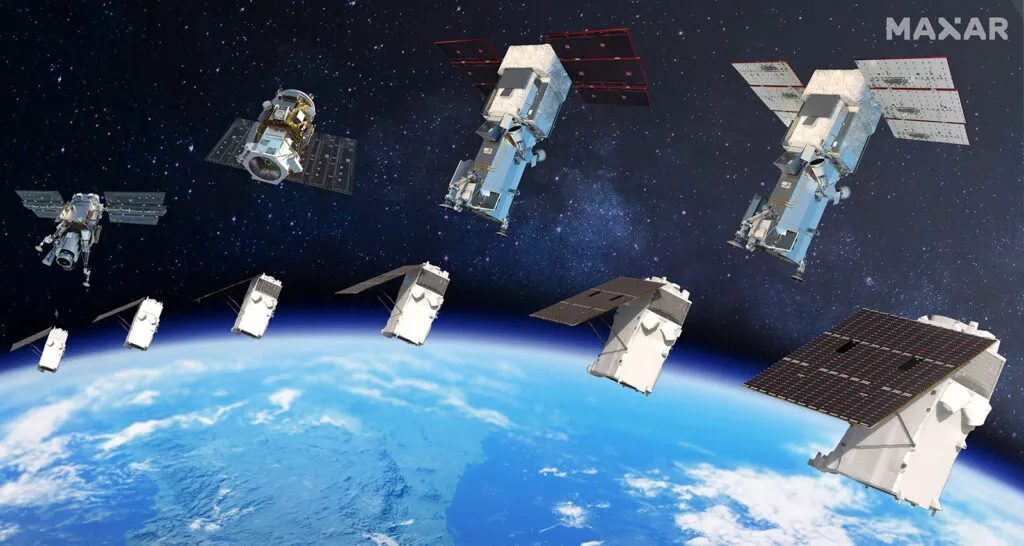
How Vantor’s constellation is setting new standards in precision, change detection, and revisit capabilities
Created in partnership with Vantor

With all six WorldView Legion satellites now fully operational, Vantor‘s next-generation constellation has ushered a new era of precision in the geospatial industry. The increased data capture capability delivers transformative impacts across various sectors, by providing clearer and more frequent images of the Earth’s surface.
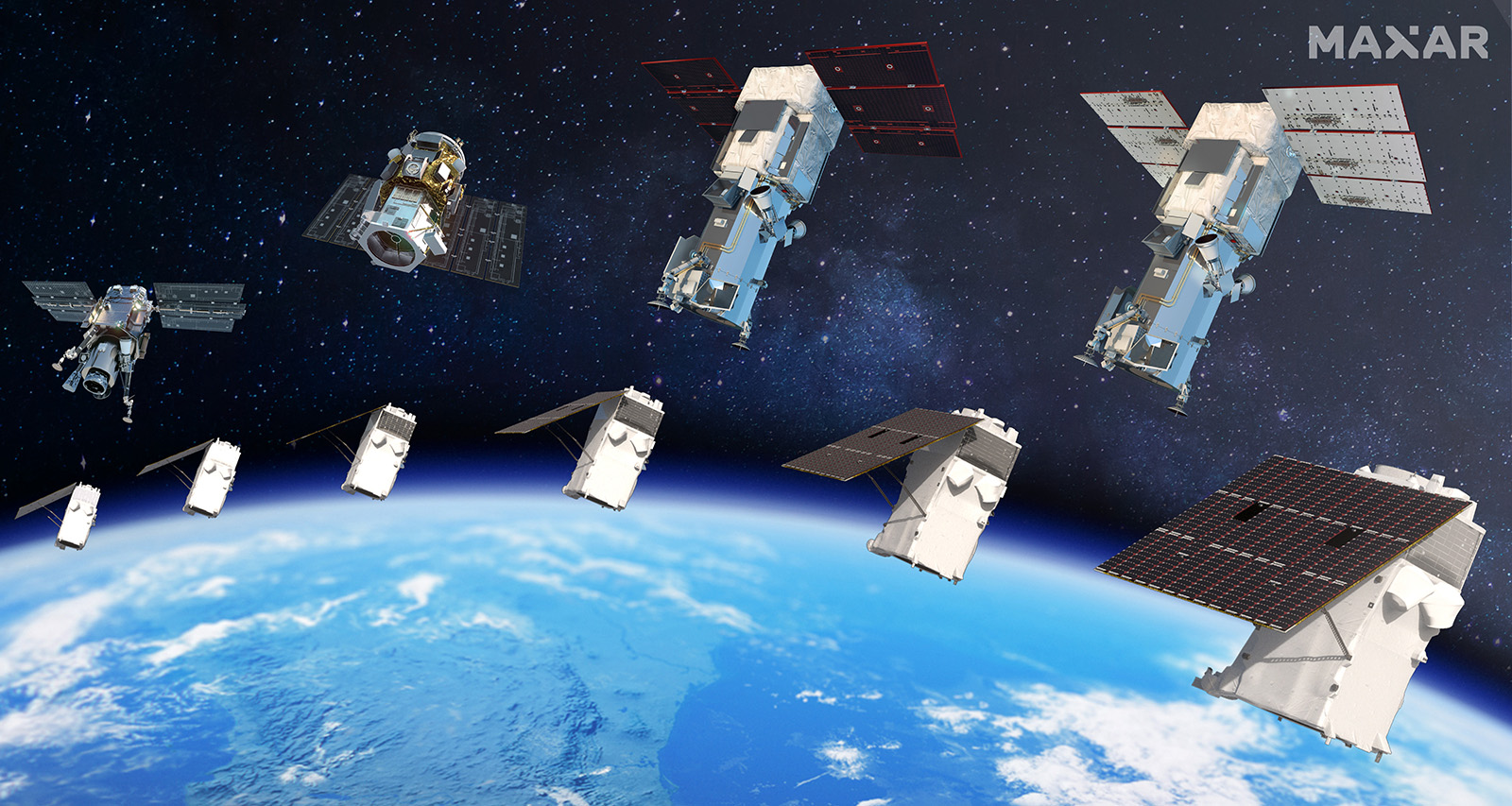
Satellite imagery expert Chris Orndorff explains the groundbreaking technologies behind the expanded constellation, and how Vantor is helping users to harness the data captured by WorldView Legion.
The Technology Behind WorldView Legion
Fixed, mid-inclination orbits
Vantor’s WorldView-1, 2, and 3 satellites are sun-synchronous, fixed-orbit satellites, focused on capturing large swathes of data. Like most satellites, which are sun-synchronous, they always pass over a given area at the same time. 4 of the 6 WorldView Legion satellites go in a different direction: “With WorldView Legion, we are focused on taking our highest resolution imagery at 30 centimeters and making it more widely available by utilizing multiple different orbits.” WorldView Legion satellites are able to capture high-resolution data across vast areas more efficiently than ever before, due to their orbits and revisit capabilities.
Mid-inclination orbits (MIO) allow WorldView Legion’s satellites to cover a broad swath of the Earth’s surface, focusing on mid-latitude regions (between approximately 45N and 45S) where approximately 90% of the world’s population lives. They are crucial for capturing data across those highly populated areas of the Earth. And vitally, unlike satellites with a traditional Sun-synchronous orbit, the mid-inclination orbits also allow them to capture data at different times of a day. “The MIO satellites won’t see Northern Europe or the northernmost parts of Canada,” explains Chris, “but the areas they do see, they’ll see more frequently—in some cases you might even have multiple passes by a single satellite over a location within the day.”
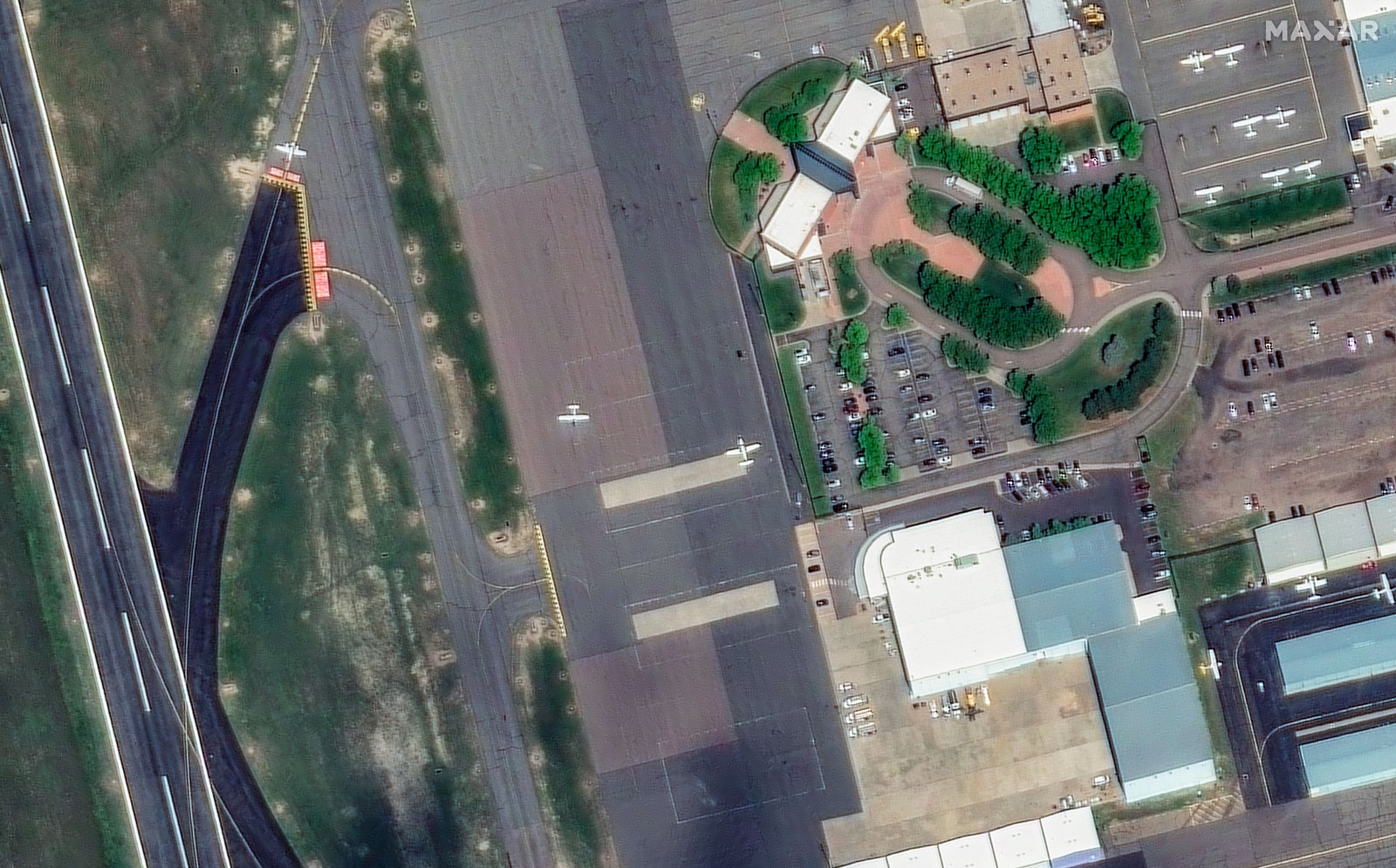
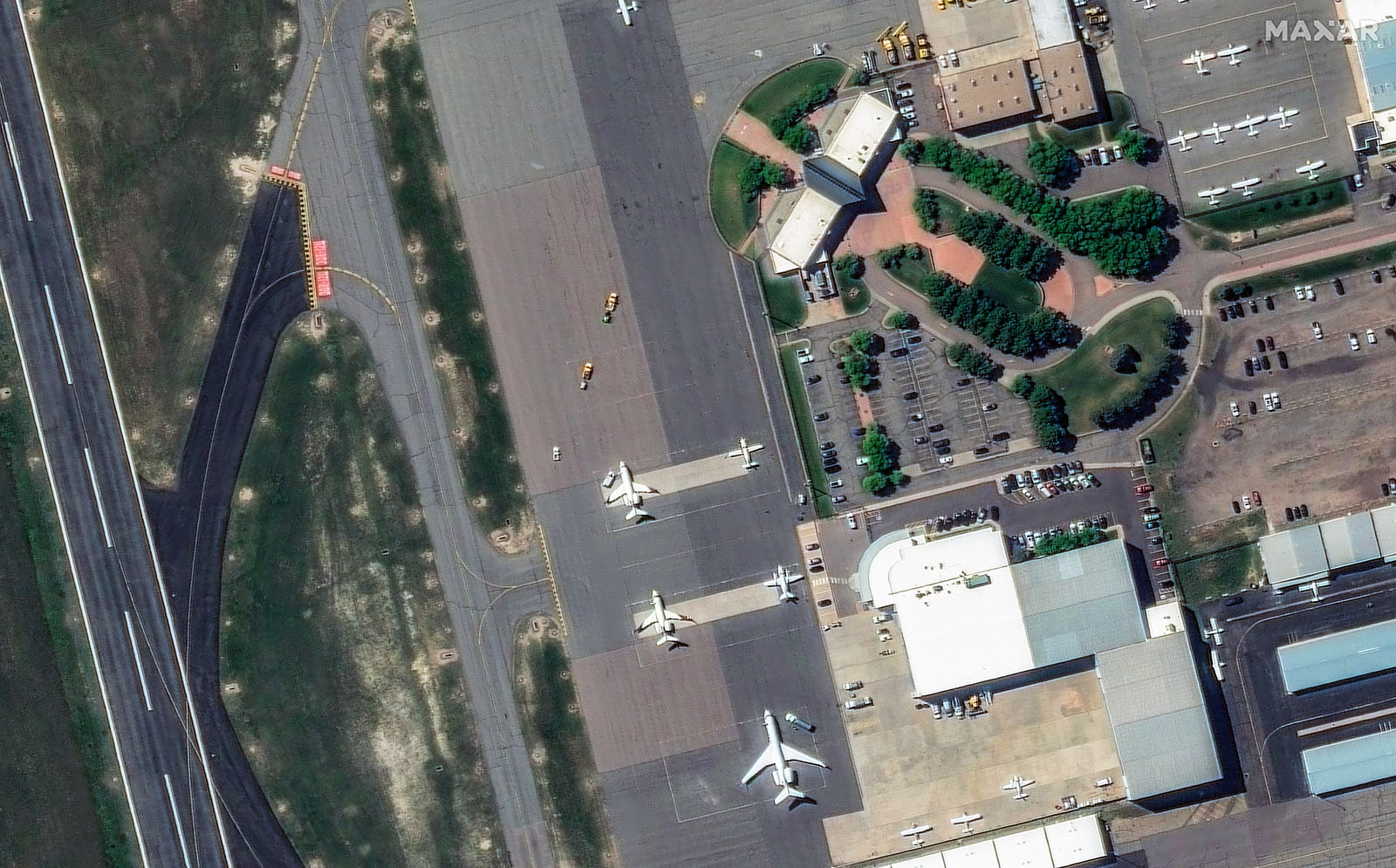
Multiple revisits in a single day have specific benefits for diverse monitoring applications. The entire constellation can achieve upwards of 15 crossings per day in certain areas of the world. This capability enables Vantor to effectively balance coverage and revisit capabilities. For instance, it accommodates differing weather and light conditions. Coastal regions in particular can build up cloud cover at different times of day depending on land mass and wind patterns, and frequent revisits can overcome this issue. “The MIO orbit gives us a lot more opportunity to collect in some of these notoriously cloudy regions,” says Chris.
Impact on Urban Mapping: The mid-inclination orbits enhance the constellation’s ability to monitor changes and maintain up-to-date imaging over key geographic regions. These mid-latitude regions include some of the world’s most rapidly changing environments—and significantly, most of its urban centres. As such, capturing detailed satellite imagery with increased regularity is of utmost strategic importance.
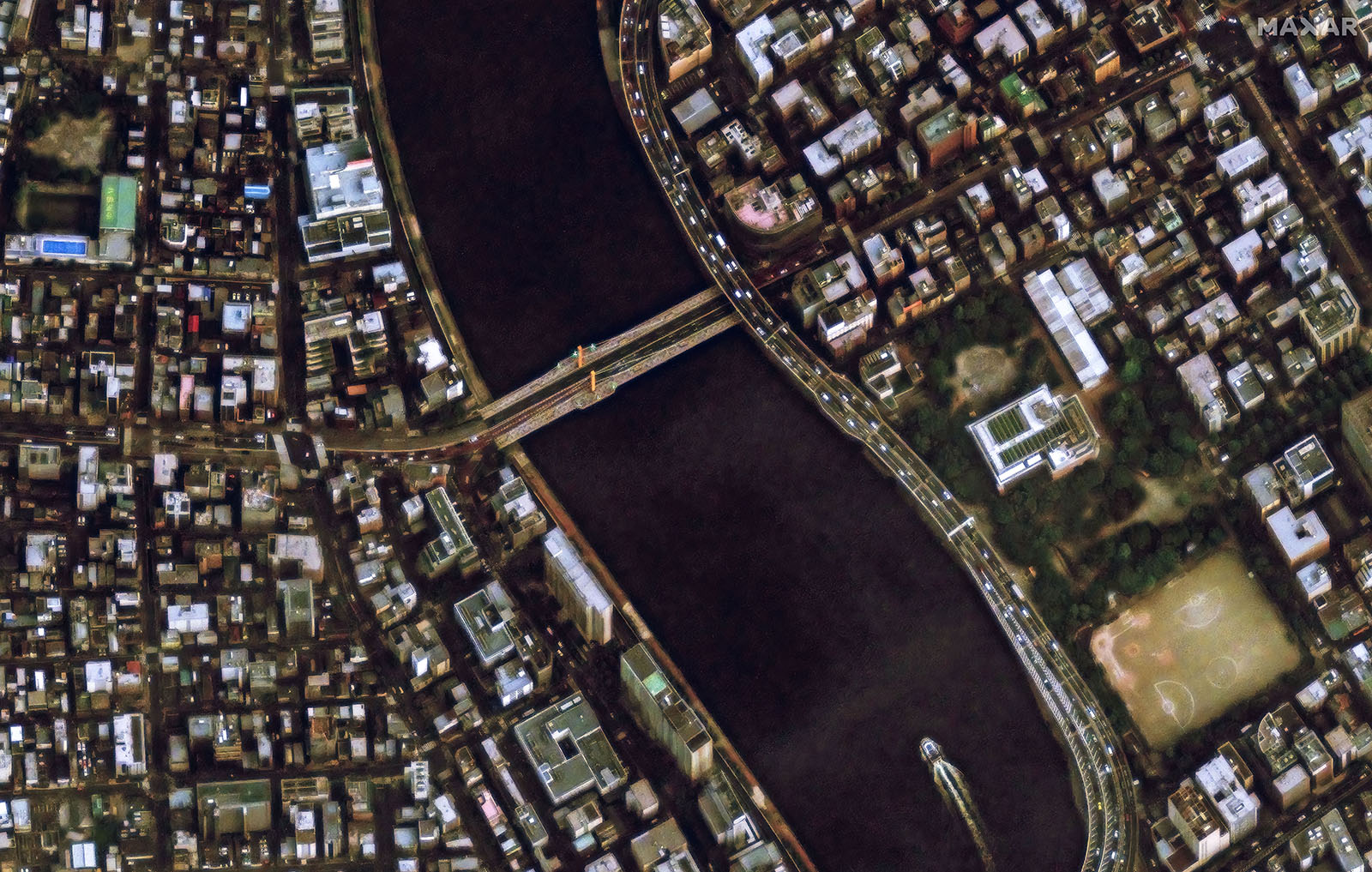
Detailed Change Detection and Timely Updates
Urban areas are dynamic, continually evolving landscapes where new developments and changes occur frequently. The expansion of these regions through urban sprawl often leads to increased pressure on infrastructure, services, and the natural environment, so efficient monitoring is crucial for city planning and sustainable development.
The ability to quickly digitize new features as they are built is also vital for keeping urban maps relevant. Ensuring that new residences, roads and structures appear on maps in a timely manner is essential for emergency services, delivery services, and public information. Changes around important cultural landmarks or critical infrastructure can have particularly significant implications for urban mobility.
Chris explains why timeliness is such a big differentiator between satellite and aerial imagery: “ For the construction of major landmarks like cultural centers or stadiums, it’s vital to know exactly when they are completed so maps can be updated for navigation. Aerial observation, even for a large city, might only happen once a year, meaning a completed construction project could take up to a year to be reflected on a map. This is a very slow way to keep maps current.”
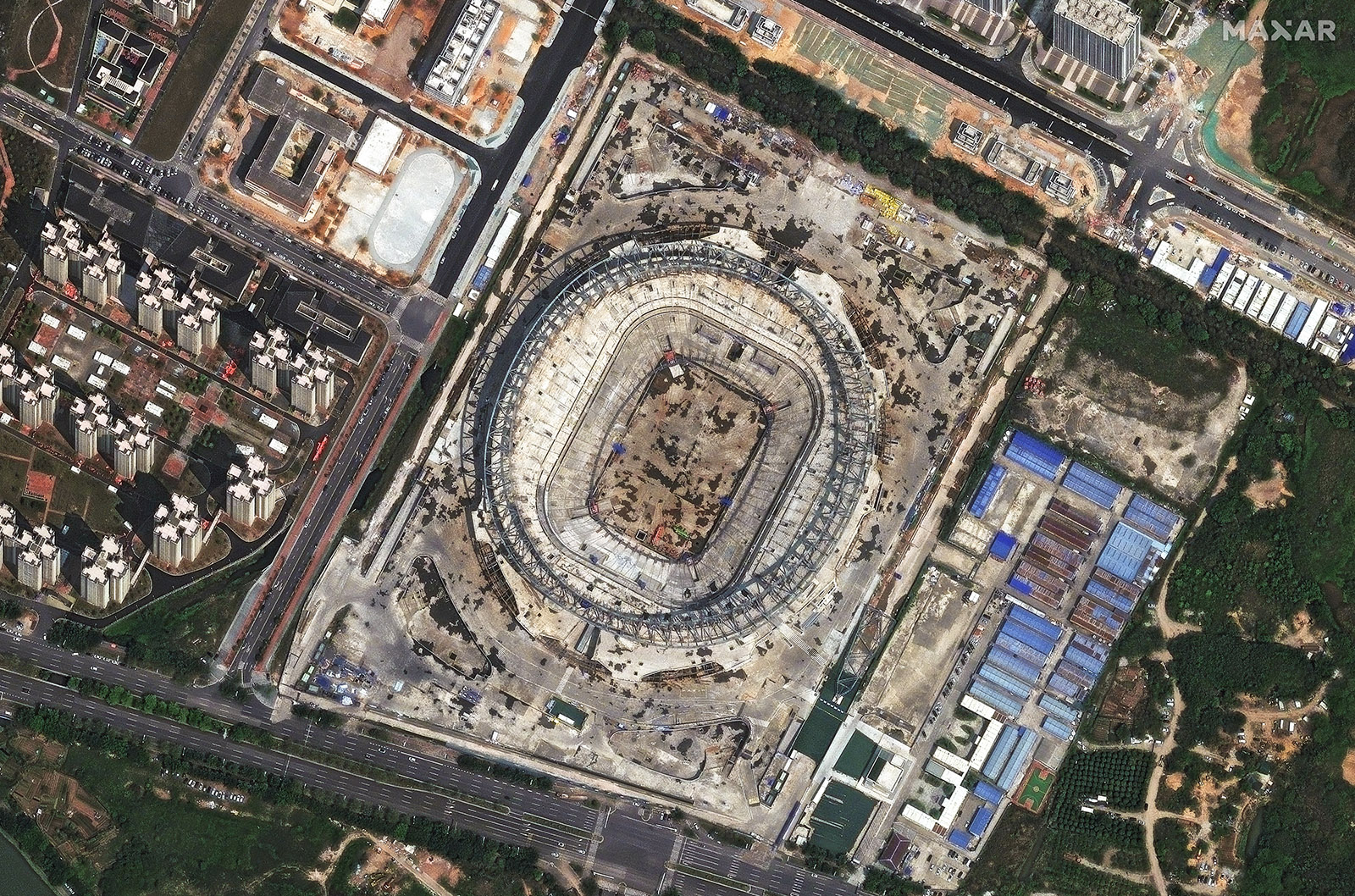
Vantor’s WorldView Legion satellites are now helping to detect these urban changes with unprecedented detail and timeliness. To do this efficiently, Maxar takes low-resolution data from broader civil government sensors and validates it against its own AI-powered analytics to pinpoint changes. The company employs a number of cutting-edge technologies to increase speed and efficiency:
Advanced Techniques in Change Detection: Ignoring Noise and Prioritizing Collections
One of the significant challenges in satellite image analysis is differentiating meaningful changes (like new constructions) from changes that are not relevant (like seasonal vegetation changes). Vantor’s advanced imaging technology and analysis tools allow for the precise identification of relevant urban features, such as roads and buildings, filtering out irrelevant ‘noise’. “A lot of change detection just shows you the difference between A and B,” says Chris, “and with EO- or SAR-based imagery, you pick up a lot of noise when doing comparisons, whether they be seasonal patterns in grass or lighting conditions. We want to make sure that that noise is not interfering with what we’re trying to do.”
Another big issue that Vantor is tackling concerns change detection within an established urban landscape. These areas are typically more difficult to monitor because of their complexity. Vantor employs an AI-driven mapping technique to highlight areas that show relevant changes. This approach allows for more focused imagery capture and analysis in regions with high development activity, ensuring resources are allocated where they are most needed. “Our building and road change vectors show us where we need to focus new collections: If our algorithms identify enough change, we prioritize those areas.”
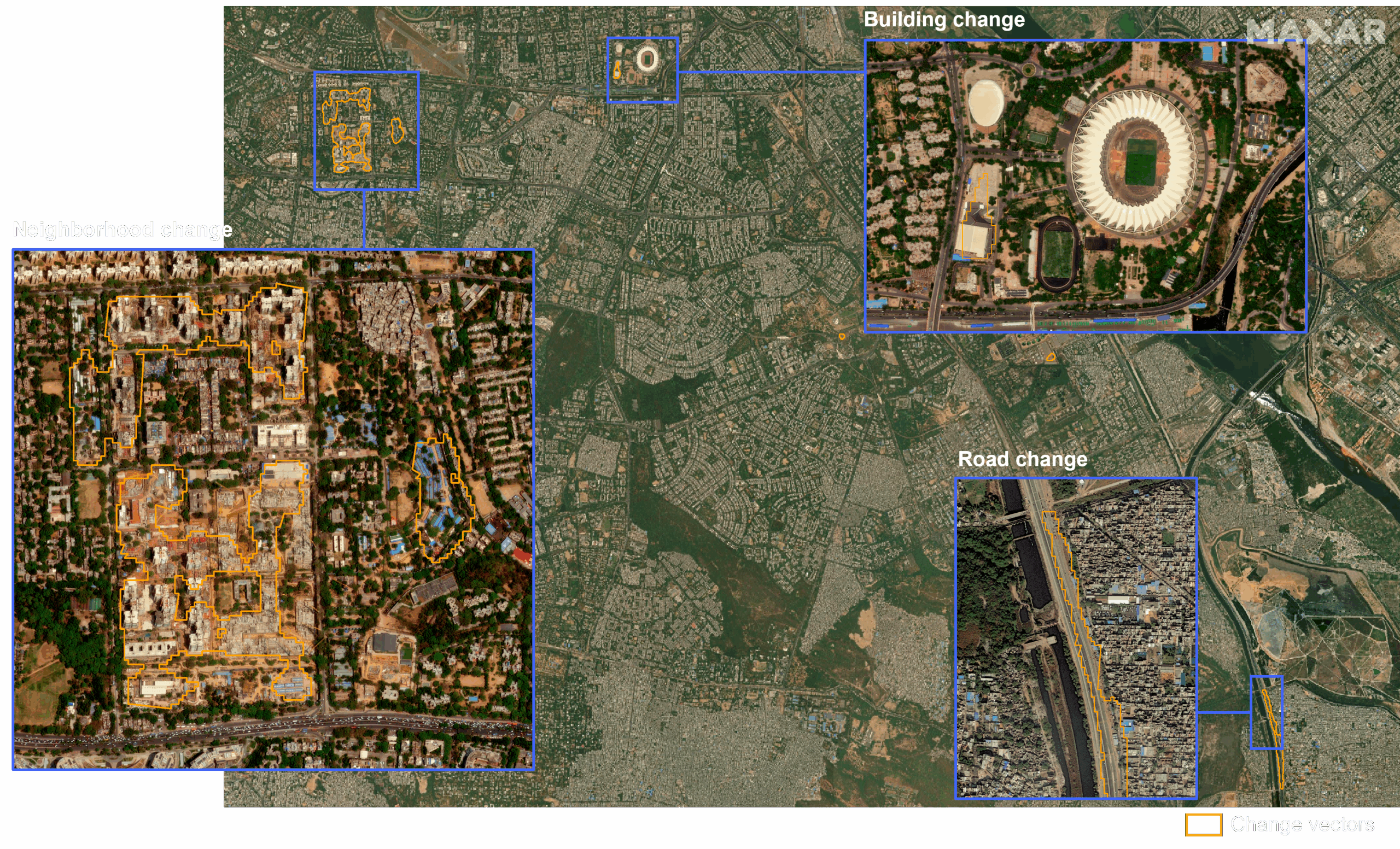
Vantor Building & Road Change Vectors in New Delhi, India, help mapmakers identify relevant construction and developments reshaping the environment.
Further applications
Improving urban monitoring and mapping may be one of WorldView Legion’s most valuable applications, but its ability to provide very frequent revisits and high-resolution data has further uses across a wide range of industries:
Environmental monitoring: Specific spectral bands can be of enormous value when it comes to monitoring environmental changes. Specifically, says Chris, they are excellent for monitoring vegetation health: “We have found that you can get increased precision around agricultural indicators, like soil moisture, from some of those near-red edge indices.”
Defense and Security: WorldView Legion offers clear benefits for defense and national security, where high-resolution, frequently updated imagery can aid in detailed surveillance and tactical planning. Meanwhile, capturing images before and during large cultural events like the Olympics or political rallies can make it easier for authorities to keep people safe.
Disaster response: In the wake of natural disasters or other crises, detailed, near-real-time imagery can help to assess damage, as well as aiding with the allocation of resources or keeping first responders safe.
Financial: Frequent revisits can make a huge difference to financial organisations, who may be monitoring ports to assess the movement of specific cargo, or assessing stockpiles of commodities at mining sites etc.
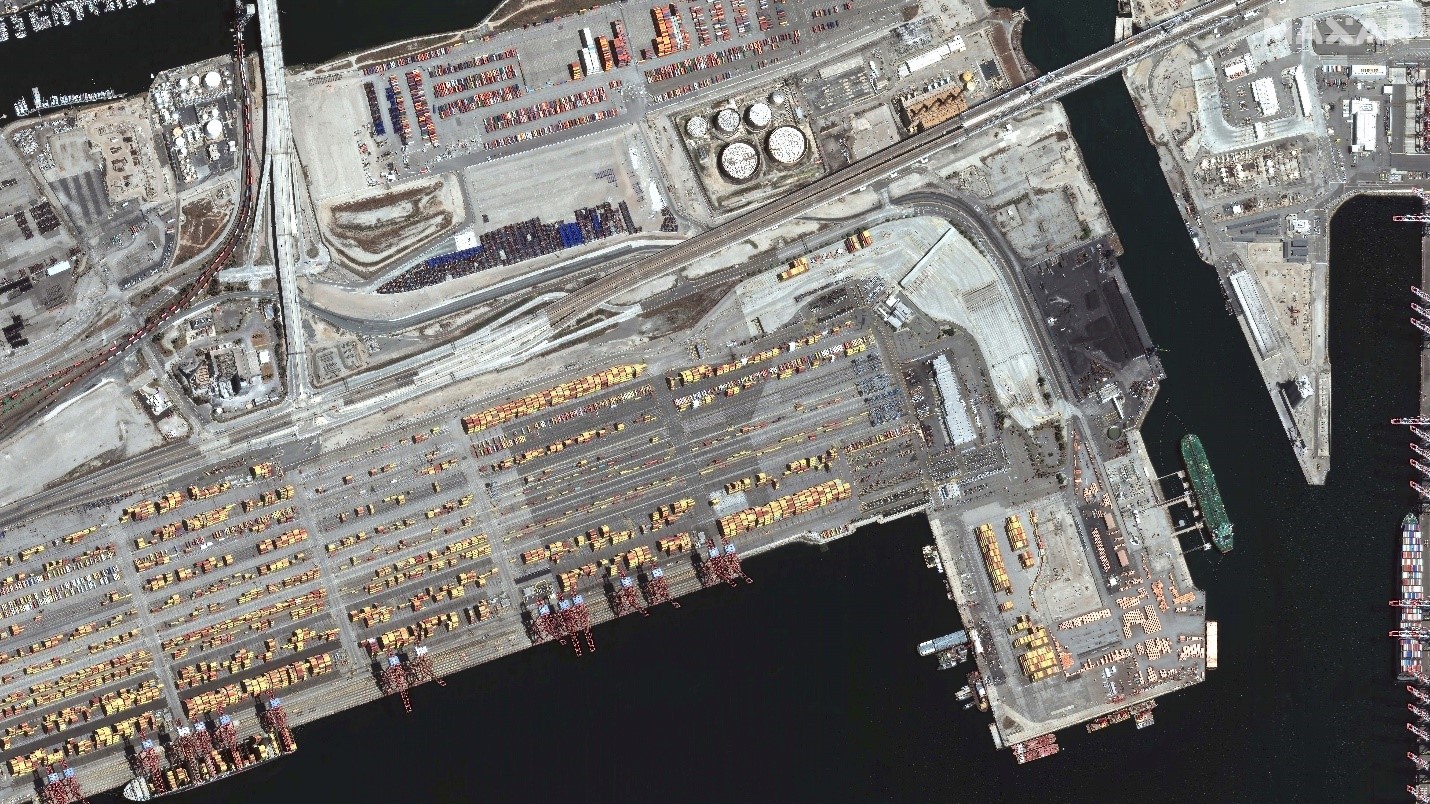
This high-definition WorldView Legion image shows shipping containers at the Port of Long Beach in California.
Enhancing Global Mapping Standards
WorldView Legion’s advanced imaging and revisit capabilities are poised to have a transformative effect on the mapping industry, enhancing global data coverage. “What’s really exciting,” says Chris, “is the speed at which we can detect changes and update the maps you use on your phone or in your car. You can see changes almost in real time. For example, if a stadium opens tomorrow, it will appear on your map, and you’ll know how to get there, where to park, or which public transit to take.”
There is also the potential for these technological advancements to standardize high-resolution mapping globally, providing detailed satellite imagery to previously under-mapped regions, something Chris is passionate about: “This is about providing the same experience around the world that people in the US or Europe or Australia or Japan have come to expect. We expect the features on our vector maps to be really crisp and of high detail, and for the basemap to have very high resolution. I want somebody in Mumbai to have the same experience as somebody in Miami. I would love to see a world where the entire basemap is 15 centimeters, as standard.”
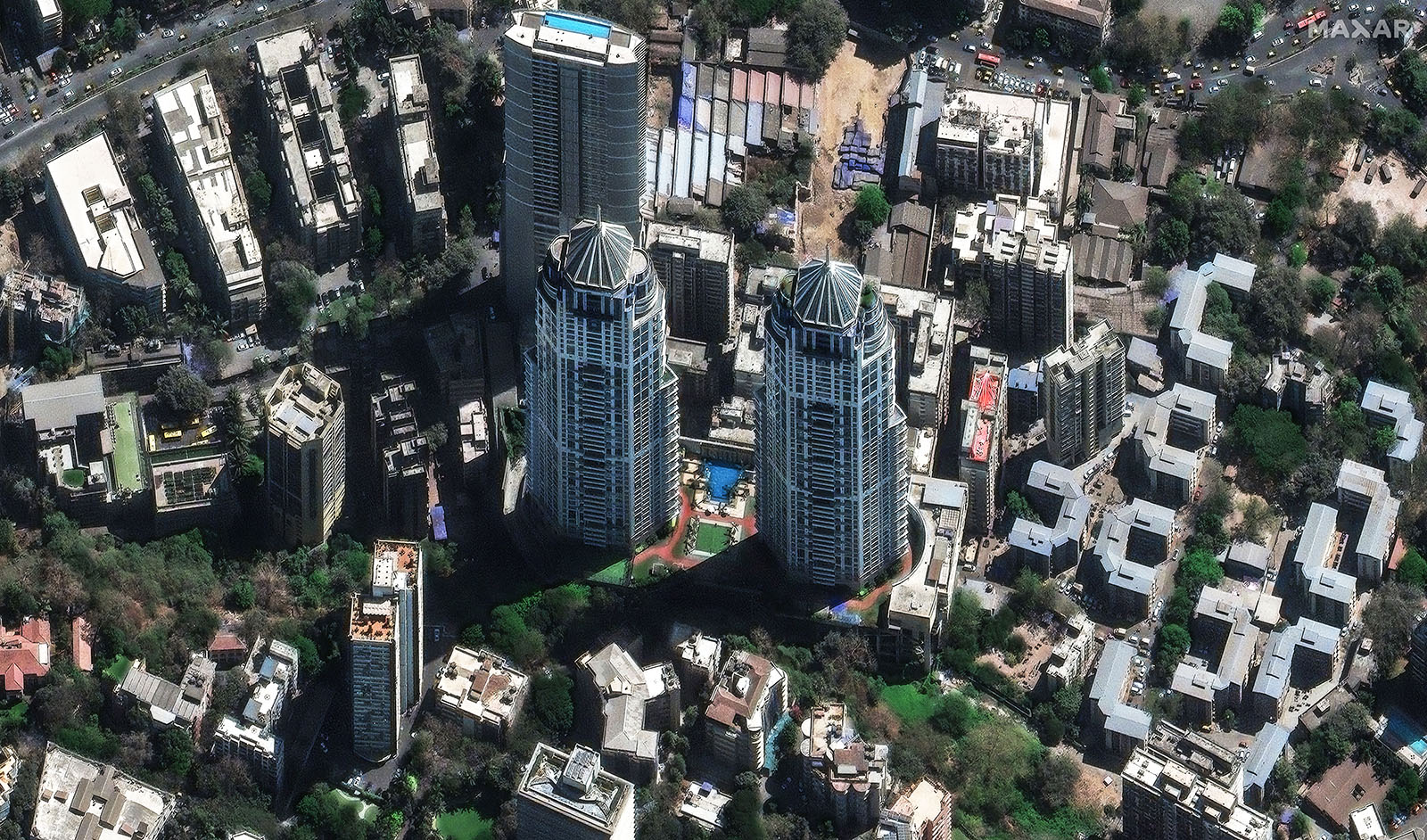
As we look to the future, ongoing innovation in satellite technology is going to be of huge strategic importance, and will continue to play a driving role in the way we map and monitor our rapidly changing world.

#Ideas

Next article
Inside SuperMap’s GIS Digital Twin Platform: A Blueprint for Smarter Infrastructure
Created in partnership with Vantor

SuperMap, a Chinese GIS software company, is rapidly gaining international traction, mirroring the broader global expansion of Chinese technology firms. Already recognized as one of the world’s leading GIS providers, SuperMap holds the second-largest share of the global GIS Software market according to ARC Advisory Report (trailing only Esri) and is the market leader in Asia. With distributors in over 50 countries and users in more than 100 countries, SuperMap’s growth is primarily driven by over 20 years of GIS innovation and ecosystem building.
SuperMap is pioneering a new approach to digital twins for urban and environmental management. The concept of a Digital Twin – a dynamic virtual replica of the physical world – is transforming how cities are planned and operated by enabling realistic mapping, simulation, and prediction of real-world systems through the integration of technologies like big data, cloud computing, IoT, AI, and GIS.
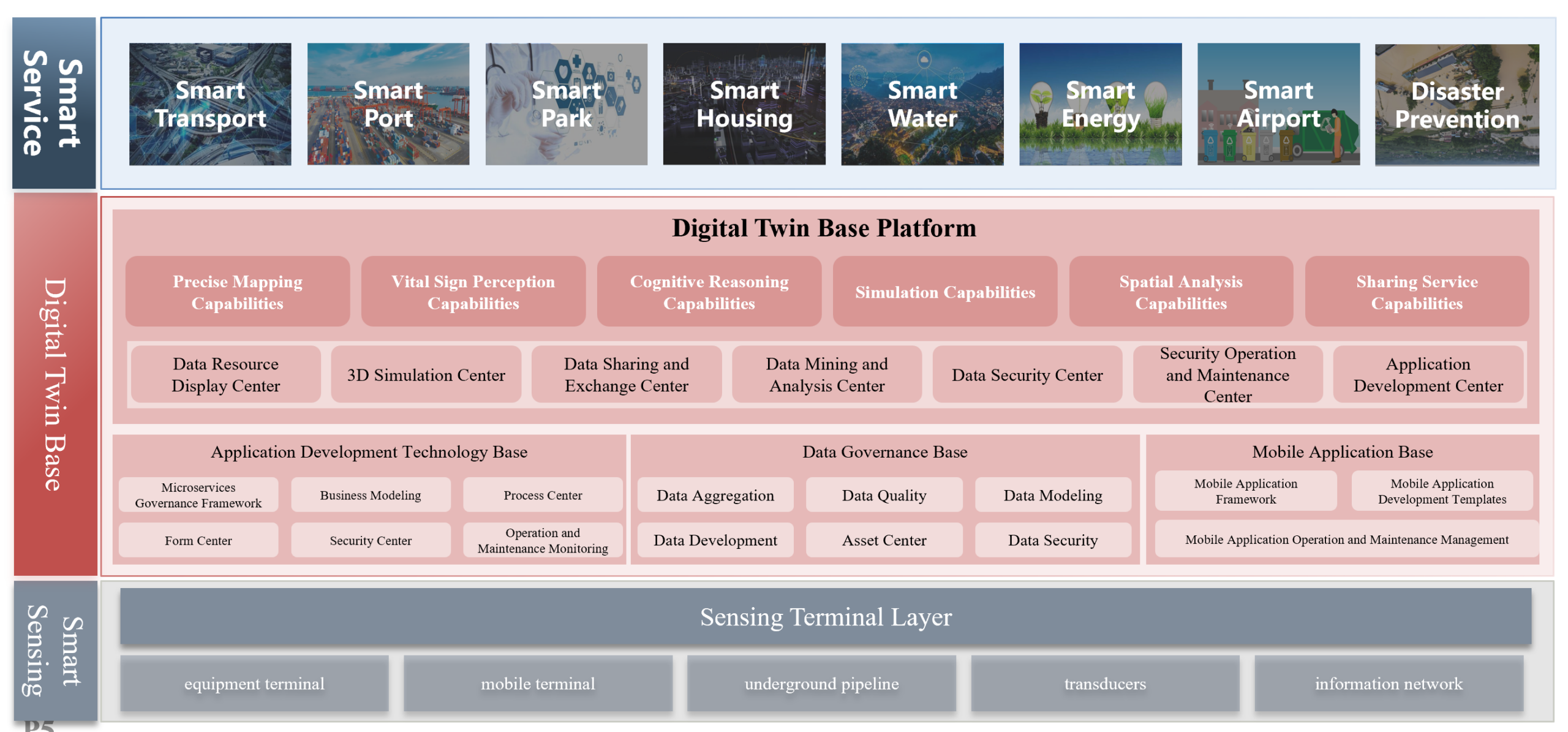
Digital Twin Platform Architecture Diagram
However, many organizations face hurdles in building effective digital twins, including siloed data standards, limited 3D capabilities, and lack of intelligent analysis. SuperMap’s Digital Twin Platform was designed to overcome these challenges. It consolidates multi-source geospatial information into an “all-space” spatio-temporal data foundation and provides a comprehensive toolkit for visualization, analytics, and collaboration. In this article, we explore the platform’s architecture and technical features – such as unified data integration, 3D/BIM support, GeoAI, and cloud-native design – and examine its real-world applications in land governance, smart cities, transportation, water management, and beyond.
Unified Digital Twin Platform Architecture and Features
SuperMap’s Digital Twin Platform is built from the ground up to unify diverse geospatial data and deliver real-time, intelligent insights. At its core, the platform merges 2D GIS maps, 3D models, BIM (Building Information Modeling) data, remote sensing imagery, IoT sensor feeds, and more into a single environment. This unified data integration breaks down traditional silos and creates a “single source of truth” for all spatial information. Below, we outline the key technical pillars of the platform:
- One-Stop Data Integration and Governance: The platform provides end-to-end capabilities for ingesting and managing multi-source, heterogeneous data. It supports standardizing and merging everything from basic survey maps and satellite imagery to oblique photogrammetry, LiDAR point clouds, BIM/CAD models, and IoT data streams. A unified data model and governance framework ensures that all datasets – regardless of format or origin – can be cleaned, stored, and integrated for use in the digital twin. This unified data foundation eliminates inconsistencies and data silos, enabling different departments to work from the same up-to-date information.
- 3D & BIM Support with Immersive Visualization: Traditional GIS struggled with large-scale 3D city models, but SuperMap’s platform is optimized for high-performance 3D. It seamlessly connects 2D and 3D geography with BIM designs, allowing entire urban environments (buildings, infrastructure, terrain) to be rendered in rich detail. By coupling GIS with a game-engine-level rendering engine, the system delivers smooth, immersive 3D scenes that support analysis, querying, and measurement. Users can visualize buildings, roads, and even underground utilities in true 3D, with realistic effects like sunlight and weather for enhanced situational awareness. This robust 3D/BIM integration means digital twins are not just static models but interactive representations of the real world, indoors and outdoors.
- GeoAI and Intelligent Analytics: “AI+GIS” is embedded throughout the platform to transform raw data into actionable intelligence. SuperMap’s geospatial AI toolkit includes capabilities like AI-based remote sensing image interpretation, construction monitoring via computer vision, automated map feature extraction, and even AI-assisted spatial Q&A. These tools enable predictive modeling and pattern recognition on spatial big data. For example, AI algorithms can detect illegal construction activities from satellite images or analyze traffic camera feeds for congestion patterns. By integrating machine learning with location data, the platform moves beyond visualization into predictive simulation and decision support, helping planners and managers anticipate trends (e.g., urban growth, land use changes) rather than just react to them.
- Cloud-Native, Scalable Architecture: The SuperMap Digital Twin Platform is designed with a modern cloud-native architecture for flexibility and scale. It employs a microservices framework where different functional modules (data services, rendering engine, analytics, etc.) run in containers and communicate via standard APIs. This allows the system to elastically scale resources for large datasets or concurrent users, and to be deployed across one cloud or multiple edge and on-premise environments as needed. The microservice design also means updates or new features can be deployed modularly without disrupting the whole system. In practice, the platform supports a “one cloud, multiple terminals” approach – meaning the same powerful engine can drive desktop GIS applications, web maps, and mobile apps simultaneously. This cloud-native foundation ensures that city-scale digital twins remain responsive, secure, and extensible, supporting cross-regional collaboration and high availability.
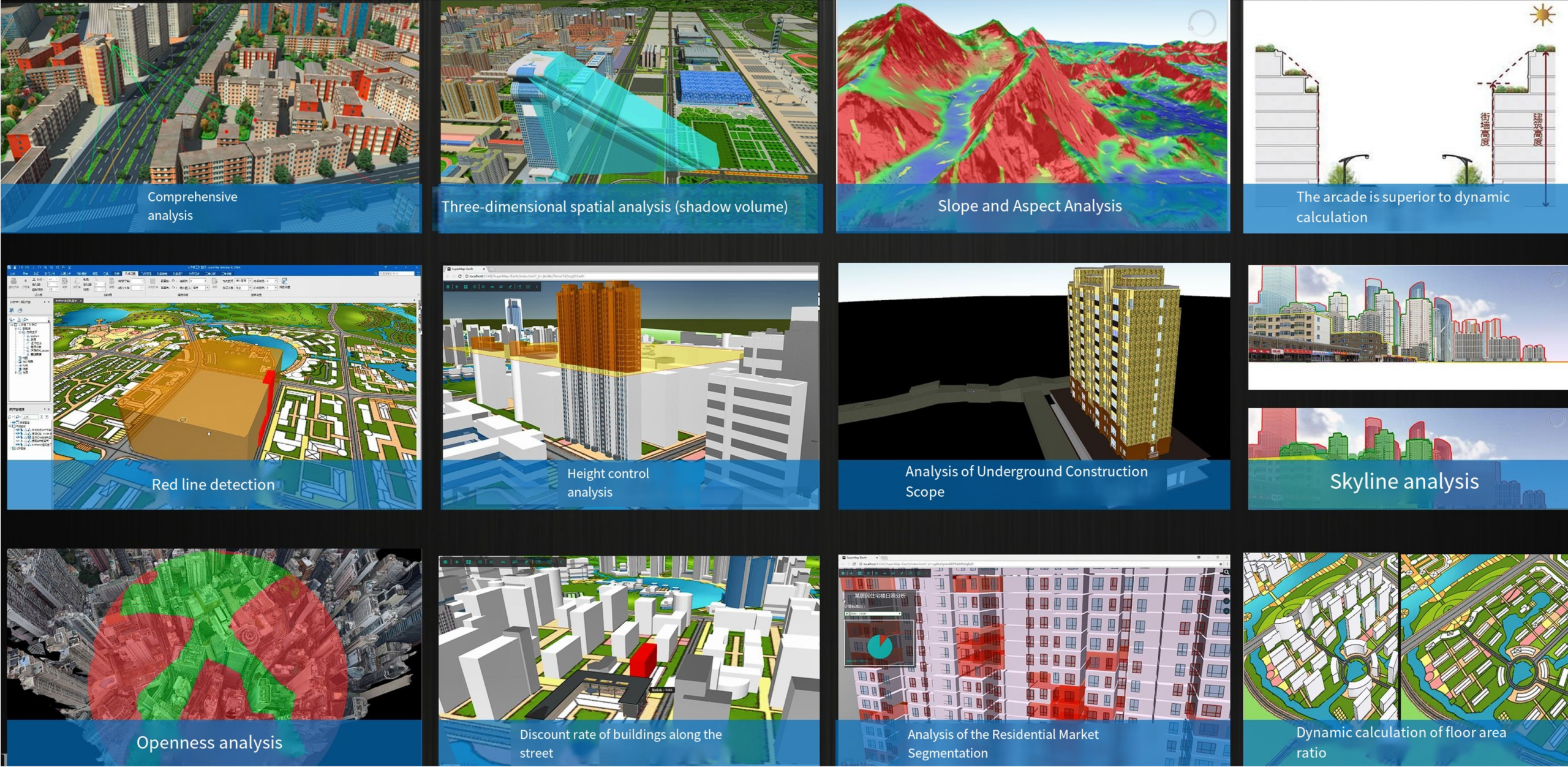
3D Visualization and Spatial Analysis
Together, these features form a distributed, intelligent, and collaborative digital twin platform that can serve numerous sectors. By building on two decades of GIS R&D and global experience, SuperMap has created a robust system that integrates all geospatial data types into one coherent model. In the next sections, we look at how this platform is being applied to solve real-world problems – from speeding up land administration to optimizing urban infrastructure – in a variety of domains.
Land Management and Natural Resources
Effective land governance and resource management are foundational to economic development and sustainability. SuperMap’s digital twin technology is helping governments modernize these traditionally slow, paper-based processes into streamlined, data-driven systems:
Digital Cadastre and Land Administration: In many regions, land ownership records are incomplete or managed in disparate, manual systems, leading to unclear rights, disputes, and slow transactions. SuperMap’s platform addresses this by deploying an AI-powered, end-to-end digital cadastre solution. It automates the entire land registration workflow – from field data collection and 3D boundary mapping to online registry updates and title issuance – creating a single, authoritative source of truth for land rights. By replacing paper maps and siloed databases with a unified digital twin of all parcels, the system brings transparency and speed to land transactions. Governments have reported dramatically faster processing (e.g. cutting permit and registration times from months to days) and fewer land disputes, as all stakeholders can access the same up-to-date information. Secure, clearly-defined land rights in turn boost investor confidence and enable land to become a reliable asset for development.
Natural Resource Permitting: Managing permits for resources like mining, forestry, or water use often involves multiple agencies and lengthy approvals, which in the past could stretch on for years. SuperMap’s integrated geospatial platform breaks down these bureaucratic silos by uniting all permitting departments on a single digital portal. Each proposed project can be evaluated against spatial rules and constraints in real-time – for example, automatically checking if a mining application overlaps a protected area or violates zoning regulations. The platform enforces clear, rule-based workflows and uses satellite imagery plus AI to continuously monitor sites for any unauthorized activities. The result is a much faster, more transparent permitting process with predictable outcomes. Companies benefit from quicker approvals and reduced corruption risk, while regulators can ensure compliance and sustainability (e.g. detecting illegal logging or mining early). By streamlining permit governance, the digital twin platform accelerates responsible investment in natural resources without compromising environmental oversight.
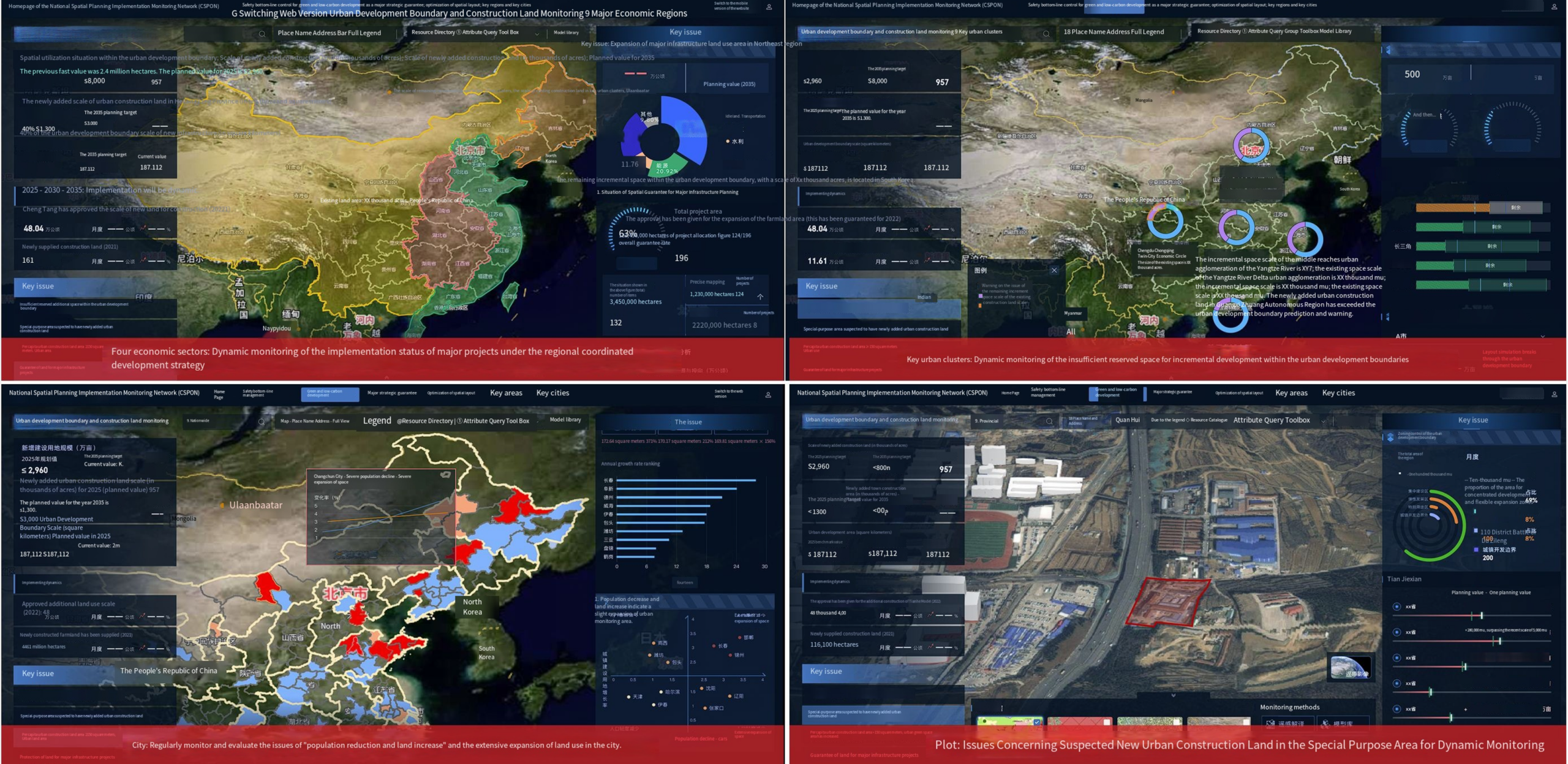
Intelligent Analysis and Predictive Decision-Making
Urban Planning and Smart City Operations
Modern cities are leveraging digital twins to plan better and manage infrastructure more intelligently. SuperMap’s platform provides urban planners and city officials with a live 3D model of the city that aggregates data across departments, enabling a shift from reactive management to proactive, data-informed decision-making.
Urban Planning & Construction Simulation: City planners traditionally rely on static maps and disconnected systems, which struggle to account for real-time changes like new developments or shifting population patterns. SuperMap’s solution creates a unified 3D digital twin of the entire city, incorporating GIS layers with BIM models of buildings and engineering works, plus real-time sensor inputs. Planners can use this dynamic model to simulate future scenarios – for example, testing how a proposed zoning change or new highway would impact traffic flow, sunlight, or emergency response times. The platform’s scenario simulation capabilities allow stakeholders to visualize and compare different development plans before implementing them. During construction, IoT sensors and drones feed into the twin, so managers can monitor progress and detect issues (like unsafe construction activity) in real time. This holistic approach leads to smarter urban growth: projects stay on schedule and within compliance, and resulting neighborhoods have optimized layouts for transportation, public services, and livability. Citizens also benefit through applications like interactive city dashboards or mobile apps that help find housing or services based on up-to-date data (e.g. locating an apartment with optimal commute and nearby amenities). In short, the digital twin becomes a virtual testbed for urban development, reducing risks and improving outcomes for city projects.
Smart Facility and Operations Management: The same platform is used to enhance day-to-day city operations and the management of facilities like campuses, industrial parks, and public spaces. By integrating real-time inputs – CCTV feeds, energy meters, traffic sensors, etc. – the digital twin serves as a unified command center for city managers. For example, in a large industrial park or smart campus, SuperMap can fuse data from all subsystems (security, power, HVAC, logistics) into one 3D operations map. AI routines automatically flag anomalies, such as an unauthorized entry detected on a CCTV or an abnormal spike in water usage, allowing rapid response. SuperMap’s Smart Park solution enabled one industrial zone to implement AI-powered security patrols and grid-based asset management, transforming a formerly fragmented operation into an efficient, safe, and tenant-friendly environment. City-wide, the platform supports use cases like utility network monitoring (preventing outages by visualizing sensor alerts on pipelines or grids) and emergency response coordination (simulating evacuation routes or deploying resources during a crisis). By moving from isolated systems to an integrated “city digital twin”, urban authorities gain better visibility and predictive capability in operations, leading to cost savings, improved public services, and higher resiliency in the face of challenges.
Transportation and Mobility
Transportation networks are another critical application area for SuperMap’s digital twin technology. As cities grow, they face congested roads, aging infrastructure, and the need for smarter mobility solutions. SuperMap’s transportation digital twin aggregates all relevant data – from detailed engineering models of roads, rails, and bridges to live feeds of traffic sensors and transit GPS – into a single 3D platform. This comprehensive view allows transportation planners and traffic control centers to simulate and optimize mobility at both the network and street level.
Using the platform, agencies can model traffic flow under different conditions (peak hours, accidents, road closures) and test interventions virtually before applying them in reality. For example, by simulating traffic patterns, a city can adjust traffic signal timings or design new bus routes to alleviate congestion hot spots. The digital twin also supports predictive maintenance of infrastructure: it can track the condition of bridges, tunnels, and pavement via IoT sensors and schedule repairs before failures occur. Integration with emerging technologies is another strength – the platform lays a foundation for Mobility-as-a-Service (MaaS) applications and autonomous vehicle testing by providing a high-fidelity spatial model of the transport network. Ultimately, these capabilities translate into tangible benefits: smoother traffic flow and shorter commutes, enhanced commuter safety, and more cost-effective management of transport assets over their life cycle.
Water Management and Environmental Resilience
Beyond urban centers, digital twin platforms are being applied to environmental and water resource management to improve resilience against natural disasters. Water conservancy agencies are leveraging SuperMap to create live digital models of entire river basins and water systems, enabling proactive management of floods, droughts, and water infrastructure.
SuperMap’s Smart Water solution integrates data from rainfall gauges, river flow sensors, satellite observations, and hydraulic models into a unified basin-wide digital twin. With this tool, water managers can simulate complex phenomena like flood waves traveling downstream or the impact of reservoir releases on communities. AI-driven forecasting is used to predict river levels and flood risks days or weeks in advance, while real-time monitoring triggers early warning alerts when certain thresholds are reached. This transforms the approach to flood control from reactive (after damage occurs) to proactive – aligning with the “Four Pre” principle (prediction, warning, preview, and plan) in disaster management. For instance, authorities can run flood scenario previews to identify which areas would be inundated if a major storm hits, and then formulate emergency plans or infrastructure reinforcements accordingly. During normal operations, the digital twin helps optimize water allocation and detect unauthorized changes to waterways (like illegal dredging or construction in floodplains) through continuous surveillance. The benefits include timely flood warnings to at-risk communities, more sustainable water use during droughts, and generally higher preparedness for water-related crises. By building a data-driven understanding of their water systems, governments can safeguard both the population and the economy from environmental threats in a way that was not possible with traditional tools.
Conclusion
From land to city to water, SuperMap’s Digital Twin Platform provides a unified digital foundation that is empowering smarter governance and infrastructure management across the board. By integrating 2D maps, 3D/BIM models, and live sensor data into one coherent system, it offers clarity in complexity – a real-time, single source of truth for decision-makers. Coupling this with GeoAI analytics and simulation means organizations gain foresight: the ability to not only see what is happening but also to model what could happen under various scenarios. The result is a shift toward proactive planning and predictive problem-solving, whether that’s preventing traffic jams or mitigating flood damage.
SuperMap’s experience and scalable technology infrastructure ensure that as the demand for digital twins grows, solutions can be rolled out at city and even national scales. In summary, SuperMap’s digital twin platform illustrates how GIS is evolving – moving beyond static maps to become the intelligent, cloud-powered backbone of smart cities, efficient transportation, sustainable land use, and resilient water management for the future.
Did you like the article? Read more and subscribe to our monthly newsletter!