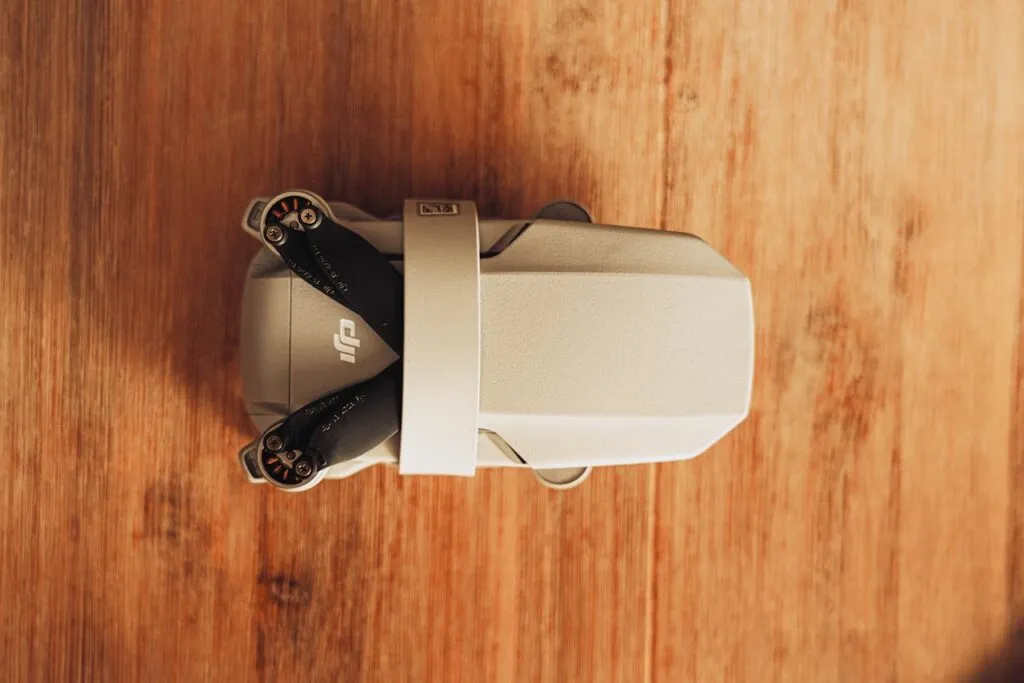

The U.S. is planning a major ban on DJI, the world’s biggest drone company, set to start on December 23, 2025. This ban, part of a defense bill (NDAA), would stop DJI from bringing any new drones or wireless products into the U.S. after that date. People can still fly the DJI drones they already own, but no new models can be sold. The FCC might even restrict previously approved devices later.
Lawmakers claim this is for national security, fearing DJI’s Chinese ties could lead to spying. However, no public proof of DJI drones spying has been shown. DJI denies these claims, arguing the ban is political, not based on facts, and has asked its American users to speak up.
As the deadline approaches, this article examines how U.S. policy toward DJI evolved and analyzes what the ban means for various stakeholders: the military, law enforcement, commercial industries, hobbyist pilots, and international observers.
Evolution of U.S. Policy Toward DJI
The relationship between the U.S. government and the Chinese-based DJI has been marked by escalating restrictions since 2017, citing concerns over national security and data vulnerabilities. Various U.S. agencies have systematically moved to limit or ban the use of DJI products.
| Year | Milestone |
| 2017 |
The U.S. Army halts all use of DJI drones over cyber concerns.
|
| 2019
|
The Department of Homeland Security (DHS) warns U.S. companies about potential data risks from Chinese-made drones.
|
| 2020
|
The U.S. Department of Commerce adds DJI to its Entity List (a trade “blacklist”), restricting U.S. firms from exporting technology to DJI.
|
| 2020
|
Congress introduces the American Security Drone Act to permanently bar federal agencies from using Chinese-manufactured drone technology.
|
| 2023
|
Congress sets a critical, looming deadline: December 23, 2025, for a formal security audit of DJI. Failure to complete it triggers an automatic punitive clause.
|
| 2024
|
The FCC halts the approval of new DJI equipment models, and U.S. Customs and Border Protection increases enforcement of import restrictions.
|
| 2025 |
As no U.S. agency successfully completes the mandated security audit of DJI, the company is automatically set to be added to the FCC’s Covered List. This action is the functional equivalent of an immediate market ban, prohibiting the authorization, import, and sale of new DJI products in the U.S.
|
With this background, the upcoming ban’s ramifications can be examined from multiple perspectives.
U.S. Military and National Security Perspective
U.S. officials see DJI as a risk, and the December 2025 ban is the final result of those worries. U.S. defense and spy agencies fear China’s government could force DJI to hand over data or use its drones for spying, potentially mapping important sites. FBI and Homeland Security cyber officials warned in early 2024 that Chinese-made drones are a “big risk” to key infrastructure. The U.S. military stopped using DJI equipment back in 2017. Since then, the Pentagon and Congress have actively worked to remove DJI from the defense supply chain to cut down on relying on Chinese technology and boost American drone development.
However, some experts question the ban’s necessity, as no public proof has shown DJI sending data to China. Multiple independent reviews—including a 2020 study by Booz Allen Hamilton and a 2021 Pentagon report—found no sign of harmful code or secret data transfer. DJI highlights its “Local Data Mode” and that it stopped all automatic log syncing for U.S. users since 2024. Despite this, the ban is mostly welcomed by the U.S. security establishment as a careful step, sending a strong message and fixing a possible weakness in America’s technology.
U.S. Law Enforcement and Public Safety Agencies
A ban on DJI drones would be bad news for American police, fire, and other public safety groups. While agreeing with the national security reason, DJI drones are essential tools for their daily work, and good, cheap replacements are hard to find.
This was proven by Florida’s 2023 state ban on Chinese drones, which forced agencies to ground hundreds of DJI units. First responders reported “huge failures” with the approved American-made replacements. Orlando Police Sergeant David Cruz reported five drone losses with U.S. models in 18 months, compared to zero with DJI over five years. Other witnesses noted that U.S.-made drones “cannot fly at night,” ending key night search-and-rescue work. The cost to replace DJI drones is huge—Florida estimated $200 million, and American alternatives cost “8 to 14 times more.” Many smaller departments cannot afford replacements, leading to sharply reduced drone operations.
Federal lawmakers are aware of these issues, leading to plans for a grant program to help first responders switch and a recognition that police and fire services need reliable alternatives. Now that the ban is near, public safety leaders are scrambling, often having to do less aerial work or hope new American drones can meet the challenge.
Impact on the Commercial Drone Sector
The likely ban on DJI is causing worry in the U.S. business world—from farming and building to movie-making. American companies widely use DJI drones because of their quality and low cost. No U.S. or European company currently matches DJI’s product range. Lawmakers like Senator John Boozman admit, “They are the main drone maker in the United States at a fair price.”
One reason for the ban is to help the U.S. drone industry grow by removing its biggest rival. This protective action could encourage U.S. drone startups and help companies like France’s Parrot or America’s Skydio scale up. The U.S. government already supports programs like the Pentagon’s “Blue UAS” list and the new “Green UAS” approval for secure business drones. However, as of 2025, no rival company can match DJI’s production scale or advanced technology for businesses.
Simply put, a DJI ban means things will cost more and U.S. businesses that use drones might slow down. Companies face higher costs for non-DJI drones and staff retraining. A secret 2021 government paper stated that forcing a switch to U.S.-made drones would reduce capability by over 80% in some cases while making costs much higher. On the other hand, American drone makers see a chance to succeed. For now, the business world will face a tough change, as no business group has more money at risk than the commercial drone sector.
The intense development of small, affordable drones for military use, spurred by the war in Ukraine, could introduce a new wave of competitors. Defence companies and startups rapidly innovating in this high-pressure environment may soon adapt their technology for commercial applications. These new players, focused on secure, resilient, and cutting-edge drone hardware and software, could quickly enter and disrupt the commercial market, particularly as they seek to scale up production and diversify their customer base beyond the military.
Effects on Hobbyist Drone Pilots
For U.S. drone pilots who fly for fun, the ban is causing worry and annoyance. DJI controls almost 90% of the consumer drone market in North America. The ban means that after December 2025, you won’t be able to buy new DJI models in the U.S., stopping the flow of new products. Pilots can still fly their existing DJI drones, but replacing them or finding spare parts will become harder.
Many hobbyists worry that other brands won’t be as good, lacking DJI’s blend of easy use, quality camera, and advanced features at a good price. DJI itself is asking American users to speak up to lawmakers. On the positive side, stores saw a rush of DJI drones available in late 2025, leading to big discounts. Also, the ban doesn’t make flying older DJI drones illegal. Hobbyist groups may turn to buying used drones or building custom ones. Other drone companies like Skydio (U.S.) and Parrot (France) might start focusing more on regular buyers. Still, American hobbyists face fewer choices and are disappointed that politics has entered their hobby.
International Reactions and Global Market Impact
Outside the U.S., the potential DJI prohibition is under intense scrutiny. Some view the U.S. action as an assertion of digital security, while others interpret it as protectionism disguised as security concerns.
Notably, no major U.S. ally has implemented a comprehensive ban on DJI drones for general or commercial purposes. European nations, Canada, and Australia continue to permit their use. This raises questions about the U.S. government’s evidence for espionage claims, with one analysis noting a “disparity between U.S. governmental rhetoric and the perceptions of allied governments.” International markets may even accrue benefits as DJI reallocates focus and surplus inventory away from the restricted U.S. market.
From China’s perspective, the ban is another front in the escalating technology Cold War. Privately, Chinese experts worry the U.S. might eventually pressure other nations to follow suit. The global drone industry sees an opportunity for non-Chinese manufacturers to capture the lucrative U.S. market. Should U.S. alternatives prove inadequate, however, the ban may simply isolate the U.S. drone ecosystem, while international users continue to advance their work with DJI’s technology.
Conclusion
The upcoming U.S. ban on DJI drones is a major change for technology, trade, and national security. It has evolved from data security worries in 2017 to a full removal of the biggest market player. The U.S. military and security groups see the ban as a win, while police and emergency services face a loss of reliable tools. In business, it will shake up the drone industry and increase costs, aiming to help American drone companies. Drone enthusiasts will face a less exciting future without DJI’s new products. Globally, the ban will affect international relationships and change the drone market’s competition for years.
As of early December 2025, it seems certain that DJI will be banned in America. Lawmakers on both sides appear ready to accept the local costs to gain control over technology. Whether this choice is smart or an overreaction is something only time will tell. For now, the skies over the United States will look different in 2026, with DJI’s once-common drones mostly stopped by law, starting a new phase for everyone involved in the drone revolution.
Did you like this post? Read more and subscribe to our monthly newsletter!



#Featured


Next article

From Gatekeeper to Enabler: Shifting the Role of GIS Professional

“I want to get most of my team out of QGIS.” This is what I recently heard from a GIS specialist working for a property development company. When I asked why, he said, “There are higher training priorities – and I am tired of explaining functionality they don’t need.”
His frustration captures a dilemma facing many organizations. When spatial questions require specialist tools, GIS professionals often face an impossible choice: spend their time training colleagues on software that is too complex for their needs, or become the bottleneck by handling every spatial request themselves.
The industry often frames this as a tooling problem. The real issue is role definition.
The Specialist Trap
Research shows that only ~5% of data scientists have experience working with geospatial data. This skills gap isn’t accidental – it’s structural. Geospatial analysis has evolved as a separate discipline with its own tools, formats, and mental models, studied apart from mainstream data science and business intelligence.
This separation made sense when spatial analysis was the domain of highly trained specialists. It’s actively harmful now that spatial questions permeate every department and structure our daily lives.
Yet geospatial analysis in the workplace creates a cognitive and language barrier. GIS professionals think about coordinate reference systems, points, and polygons. Their teams think in place names and addresses. GIS works with shapefiles and rasters while traditional business analysts prefer straightforward tables with easily readable values in every cell.
Then add the technical barriers. Data preparation – already the most time-consuming and least enjoyable data science task according to industry surveys – becomes exponentially more complex with spatial data. File sizes balloon, and format conversions multiply. A typical GIS workflow involves 6-10 specialized tools, and that’s before counting the ancillary utilities needed to make them work together.
The infrastructure reflects this fragmentation. Engineers export from CAD. GIS specialists convert and reproject. Data analysts need it in their preferred BI tool. Field teams require mobile access. Stakeholders want to just skip to the bottom line. Traversing this chain once is time-consuming – but try keeping the information current on a daily basis.
The Enabler Mindset
The good news is that many GIS professionals are shifting from positioning themselves as “geospatial gurus” and gatekeepers to facilitators and enablers who make spatial analysis possible for team members.
This requires rethinking what “GIS infrastructure” means. It’s not about providing the most powerful specialist tools. It’s about identifying individual stakeholder needs and resolving both the technical and cognitive barriers that prevent non-specialists from accessing spatial insights.
Technically, this means:
- Automatic format conversions invisible to end users
- Real-time data synchronization across desktop, web, and mobile
- Processing that happens server-side, not on individual laptops
- Permissions and team management designed for cross-functional collaboration
- Geocoding built into workflows, not as a separate preprocessing step
Cognitively, this means:
- Data volumes and complexity abstracted away from users who just need answers
- Multiple entry points to the same data: specialists get QGIS, field crews get mobile apps, executives get dashboards – all synchronized
- Spatial operations presented as business questions (“Which sites are within 30 minutes of the distribution center?”) rather than GIS functions
The GIS specialist I mentioned in the introduction made this shift explicit. They moved most users to web-based interfaces while maintaining a QGIS connection for the two staff members who needed advanced capabilities. The key was real-time synchronization – field data collected via mobile appeared instantly in the desktop environment and on stakeholder dashboards. The organization maintained spatial analysis capabilities while eliminating the specialist bottleneck.
From Silos to Systems
Platforms exemplifying this integrated approach are emerging. NextGIS, for instance, connects QGIS desktop functionality with web interfaces and Android mobile apps through live synchronization. Data edited in QGIS appears immediately on a colleague’s phone. Field updates flow to interactive web maps in real-time. The GIS professional maintains control over data quality, projections, and standards while everyone else accesses what they need through interfaces matching their specific use cases.
This isn’t about replacing specialists. It’s about leveraging their expertise differently. Instead of spending the lion’s share of time producing outputs for others, GIS professionals can focus on data architecture, quality control, and sophisticated analyses that genuinely require their skills.
The organizations that will extract maximum value from spatial data aren’t those with the most GIS specialists. They’re the ones where GIS professionals have successfully engineered themselves out of answering routine spatial questions – because they’ve built systems that let everyone else answer those questions themselves.
Learn more about NextGIS at NextGIS.com.
Author Bio
With experience spanning private sector, government, and nonprofit organizations, Dmitry Nikolaev focuses on the intersection of data analysis, business process optimization, and strategic communication. At NextGIS, Dmitriy supports international market development and works with clients to align technology adoption with organizational change.